This is the testing/development version of the Koch Institute website.

News

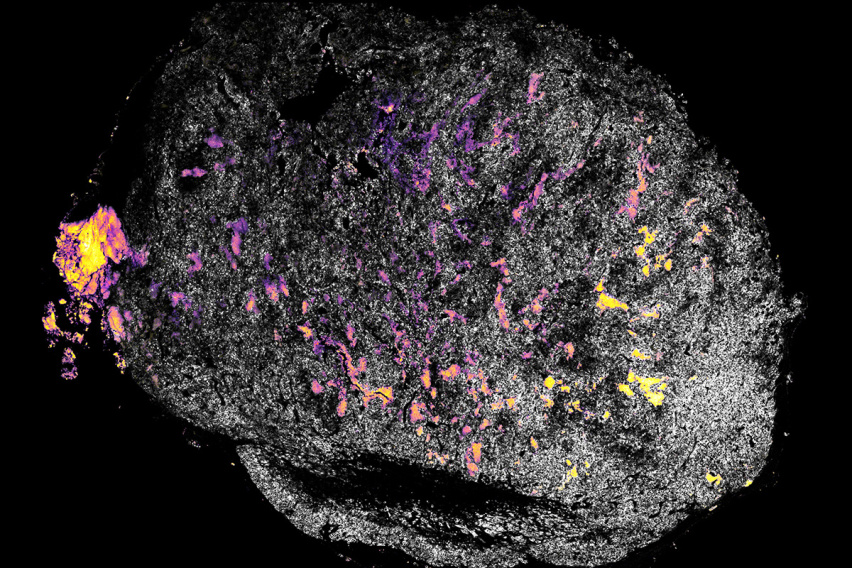
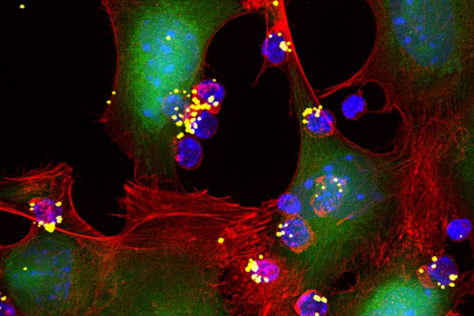
a tumor imaged after treatment, stained pink for IL12 and yellow for alum

Alum for the Ride

MIT News

Irvine and Wittrup lab researchers have developed a technique to make cytokine therapy less toxic. These immunostimulatory molecules are quite potent and can have devastating side effects if administered systemically. In a preclinical study appearing in Nature Biomedical Engineering and supported in part by the Marble Center for Cancer Nanomedicine, the researchers anchored the cytokines to tumors with aluminum hydroxide, a compound that is often used to make vaccines more effective. They then administered immune checkpoint blockade therapy, observing that the tumors were eliminated in 50 to 90 percent of the mice across three cancer types. The technology has been licensed to a startup company that hopes to begin clinical trials by the end of the year.

Filter by

Filter by Title/Description

Filter by Topic

Filter by Year

Taris Touts Trial Success

MIT Koch Institute

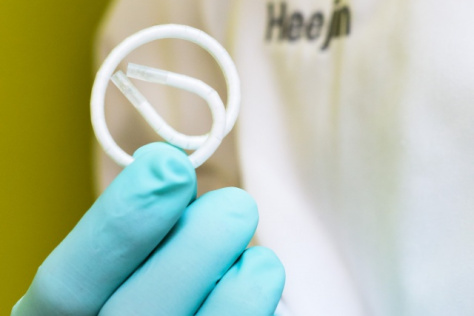
Taris Biomedical, founded by David H. Koch Professor of Engineering Michael Cima and David H. Koch Institue Professor Robert Langer, has made exciting headway in translating its approach to treating muscle-invasive bladder cancer. TAR-200 is an implantable device developed by the Cima and Langer Labs that continuously administers gemcitabine, a chemotherapy drug, for multiple weeks. First, Taris shared positive results from an ongoing study of the device alone, which suggest therapeutic benefit to both patients who undergo radical cystectomy and those unfit for surgical intervention. Two weeks later, the company announced the dosing of the first patient in a new clinical trial, in collaboration with Bristol-Myers Squibb, that combines the device with nivolumab, an approved cancer immunotherapy.

Killing Tumors with Cytokine-ness

MIT News

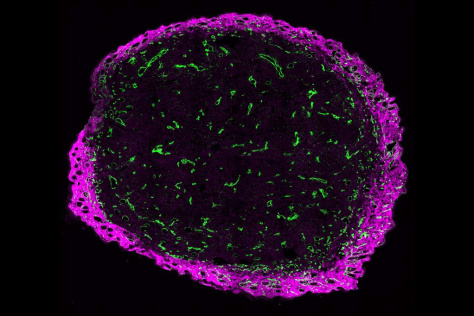
Immune cell signaling proteins, known as cytokines, are highly toxic—not just to tumors but, unfortunately, to healthy tissue as well. Wittrup Lab researchers are delivering cytokines directly into solid tumors and using the collagen-binding protein lumican to confine these cell-killing proteins within the tumoral space. Their strategy, described in Science Translational Medicine, leverages the protective layer of collagen produced by the cancer cells to prevent leakage of these toxic agents into the bloodstream and opens up previously-closed avenues for combination immunotherapy. 

Give Her an Inchworm, She'll Go the Extra Mile

MIT Technology Review

Ritu Raman and her inchworm-like creations were honored by MIT Technology Review in their annual celebration of "35 Innovators Under 35." A postdoc in the laboratories of Michael Cima and Robert Langer, Raman combines traditional and biological materials to create robots and machines that interact with their environment and take action. Her 3D-printed biohybrid designs have the potential to improve both human and environmental health.  Learn more about biohybrid design in Raman and Langer's review article in Advanced Materials and read her reflections on her career in this interview with HubWeek.

Compound Interest

MIT News

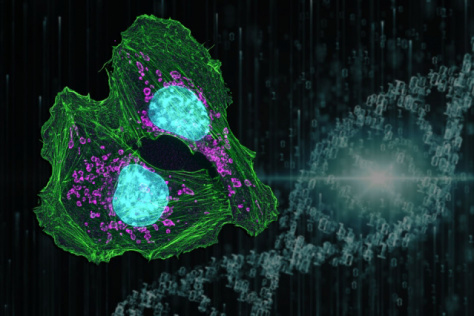
Researchers in the laboratories of KI faculty members Michael Hemann and Graham Walker discovered a compound that may make cancer cells more susceptible to cisplatin and similar cancer therapies on the first and, importantly, subsequent doses. Cisplatin and drugs like it work by severely damaging the DNA of cancer cells, which have often lost one of the more reliable means of DNA repair. The newly-identified compound, known as JH-RE-06, interferes with a key component of translesion synthesis, a less accurate DNA repair pathway that not only helps cells survive chemotherapy, but introduces mutations that might confer resistance to future treatment. The study, appearing in Cell and funded in part by the MIT Center for Precision Cancer Medicine, found that the combination killed many more cells than cisplatin alone and that surviving cells were far less able to generate new mutations.


Backpacks on the Fast Track

MIT Koch Institute

Torque Therapeutics, founded by KI Associate Director Darrell Irvine, has fast-tracked its Deep-Primed T cell immunotherapy program, potentially expediting approval for its use for patients with relapsed or intractable solid tumors and lymphomas. Currently in clinical trials, the technology attaches nanoparticle "backpacks" to T cells that have been programmed to target and attack tumors. The backpacks deliver immune-stimulating drugs that help T cells survive and function while avoiding some of the toxic side effects that come with systemic delivery of drugs.

Scholar of Repute

Pew Charitable Trusts

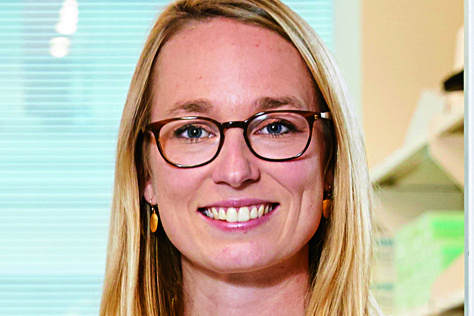
Congratuations to KI faculty member Stefani Spranger, one of seven researchers selected as a 2019 Pew-Stewart Scholar for Cancer Research. Jacks Lab alum Michel DuPage and Hemann Lab alum Luke Gilbert were also selected. A partnership between the Pew Charitable Trusts and the Alexander and Margaret Stewart Trust, the scholarship program supports researchers pursuing groundbreaking work focused on better understanding the origins, diagnosis, and treatment of cancer. Spranger will use the four-year grant to examine how the makeup of patients’ tumor immune microenvironment contributes to their response to immunotherapy. Additionally, Spranger received a 2019 Young Investigator Award from The Melanoma Research Alliance.

Better Breast Cancer Risk Prediction

MIT Koch Institute

A deep-learning model developed by KI member and Delta Electronics Professor Regina Barzilay can predict from a mammogram if a patient is likely to develop breast cancer within five years. Trained on mammograms and outcomes from more than 60,000 patients at Massachusetts General Hospital, the model learned to spot patterns in mammograms that are precursors to malignant tumors. Published in Radiology, the model performed significantly better than existing approaches, and could be used in the future to build personalized breast cancer screening plans. Read more.

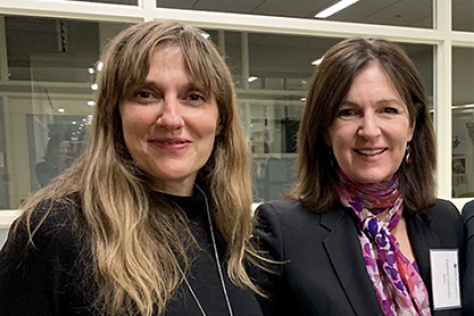
At last month's SOLUTIONS with/in/sight, Barzilay was joined by her co-author, Harvard Medical School Professor and Director of Breast Imaging at Massachussetts General Hospital Constance Lehman, to talk about the new model and earlier work using deep-learning models to screen for dense breast tissue. Managing Director of The Boston Globe and STAT Linda Pizzuti Henry moderated the discussion, with an introduction from MIT president emerita and KI faculty member Susan Hockfield. Watch video. 

Guiding Light

MIT News

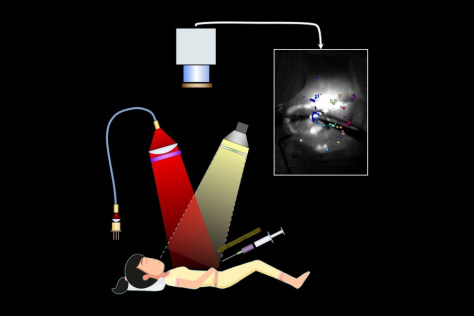
A new system developed by the laboratory of KI member and James Mason Crafts Professor Angela Belcher could pinpoint ovarian tumors during debulking surgery and improve survival rates for patients. Most ovarian cancers are diagnosed in advanced stages of the disease, after tumors—often quite small—have spread so abundantly throughout the abdomen that it is difficult for a surgeon to remove them all. In a mouse study led by Mazumdar-Shaw International Oncology Fellow Neelkanth Bardhan and published in ACS Nano, researchers identified tumors as small as 0.2 millimeters with a combination of near-infrared light and single-walled carbon nanotubule probes. Researchers are seeking approval for a FDA phase 1 clinical trial for the system and plan to adapt it for monitoring patients for recurrence of tumors and for early-stage diagnosis of ovarian cancer. The system was developed with support from the Koch Institute Frontier Research Program and later tested with support from the Bridge Project.

Your Summer Reading Is Here

MIT Koch Institute

Susan Hockfield's book, The Age of Living Machines has officially hit the bookshelves. Offering a glimpse into a possible future driven by the convergence of biology and engineering, Hockfield describes how researchers at the KI, MIT, and beyond are assembling the "biological parts list" developed from 20th-century revelations in molecular biology and genetics into a stunning array of "living machines" to solve some of the most important—and difficult—challenges of the 21st century. Get a sneak peek into this exciting new book at MIT News or on WGBH's Greater Boston.

 Aneuploidy in Prostate Cancer

MIT News

Prostate cancers with higher levels of aneuploidy—an abnormal number of chromosomes—also come with higher lethality risk for patients, according to a new study from a Bridge Project team co-led by Angelika Amon, KI member and Kathleen and Curtis Marble Professor in Cancer Research, and Harvard T.H. Chan School of Public Health faculty member Lorelei Mucci. Using a collection of prostate cancer tumor samples, researchers extrapolated the degree of aneuploidy from each sample's genetic sequencing information and compared it to information about patient outcomes. Patients with a higher degree of aneuploidy were five times more likely to die from the disease. The findings, published in Proceedings of the National Academy of Sciences, suggest that aneuploidy could be used to more accurately predict patients' prognosis and to identify patients who might need more aggressive treatment.