This is the testing/development version of the Koch Institute website.

News

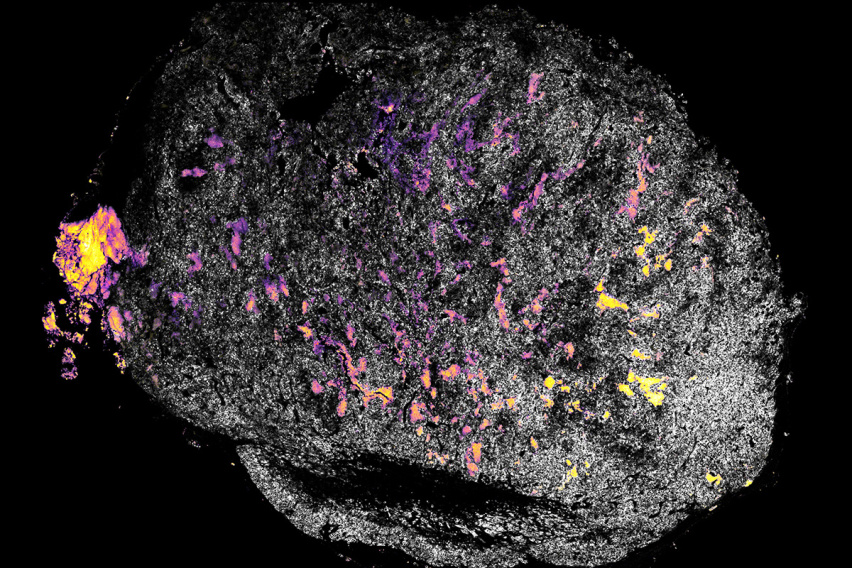
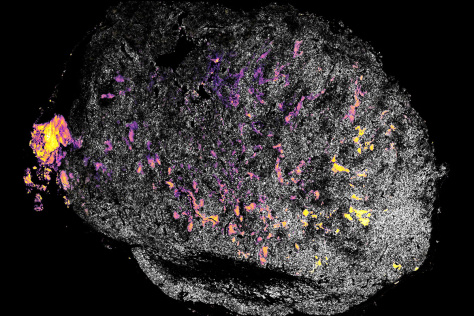
a tumor imaged after treatment, stained pink for IL12 and yellow for alum

Alum for the Ride

MIT News

Irvine and Wittrup lab researchers have developed a technique to make cytokine therapy less toxic. These immunostimulatory molecules are quite potent and can have devastating side effects if administered systemically. In a preclinical study appearing in Nature Biomedical Engineering and supported in part by the Marble Center for Cancer Nanomedicine, the researchers anchored the cytokines to tumors with aluminum hydroxide, a compound that is often used to make vaccines more effective. They then administered immune checkpoint blockade therapy, observing that the tumors were eliminated in 50 to 90 percent of the mice across three cancer types. The technology has been licensed to a startup company that hopes to begin clinical trials by the end of the year.

Filter by

Filter by Title/Description

Filter by Topic

Filter by Year

Probing Protein Pairing

MIT News

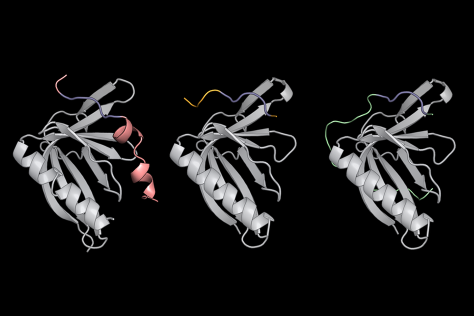
No protein is an island; most rely on partners to carry out their vital functions. A new screening method from the Keating Lab probes more deeply into how proteins recognize and bind to one another. In studies published in eLife last December and January, researchers used information generated by the new method to guide the design of a synthetic molecule that binds ENAH, a protein implicated in cancer metastasis. Their results could inform the future design of cancer drugs, as well as fundamental understandings about cell function and regulation

Langer Wins BBVA Foundation Frontiers of Knowledge Award

BBVA Foundation

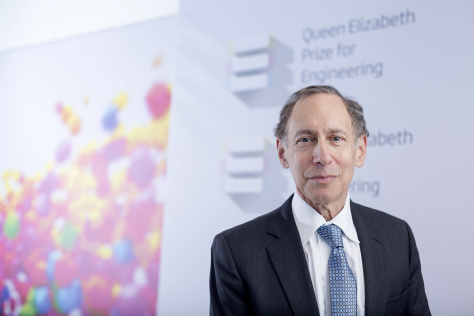
Robert Langer, David H. Koch (1962) Institute Professor, has won the prestigious BBVA Foundation Frontiers of Knowledge Award in the Biology and Biomedicine category. He shares the award with Dr. Katalin Karikó and Dr. Drew Weissman  in recognition of their contributions to messenger (mRNA) therapeutics and delivery technology, which enabled the rapid development SARS-CoV-2 vaccines and promises to expand to other therapeutical areas, including cancer, autoimmune and neurodegenerative disorders, enzyme deficiencies, and other viral infections. In particular, Langer is cited for his work enabling the repackaging mRNA and other macromolecule therapeutics for their delivery into cells.


Interactions of Interest

Morgridge Institute for Research

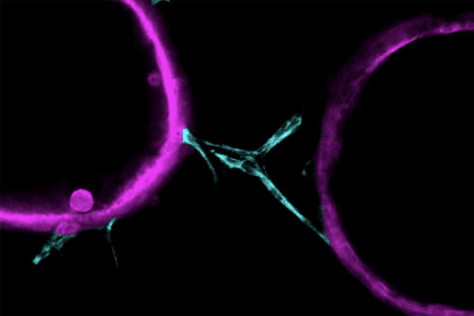
A new paper in Science Advances describes how cancer cells can hijack the metabolic activity of certain non-cancer cells in the pancreas to fuel tumor growth. The study combines a sophisticated 3D organoid model developed by the Vander Heiden Lab with optical imaging from the Morgridge Institute’s Skala Lab to better understand tumor cell proliferation in the context of the tumor microenvironment.

The Right Tempo for Cancer Screening

MIT News

Tempo, an AI-based tool developed by Regina Barzilay, tailors breast cancer screening guidelines to a patient’s individual risk. A study of hospital datasets published in Nature Medicine showed that Tempo worked most efficiently when paired with the team’s risk-assessment algorithm Mirai, detecting cancer earlier while recommending fewer screenings overall. The technology’s dynamic framework is designed to make cancer screenings more cost-effective and equitable.

Seq and Ye Shall Find

Broad Institute

One major challenge in cancer genetics is figuring out which of the millions of protein-coding mutations drive disease. A report appearing in Nature Biotechnology describes a new method that combines experimental and computational approaches to assess the functions of these genetic alterations. The work builds on sequencing tools developed in the Broad Institute labs of KI members Aviv Regev and Jesse Boehm.

Alum for the Ride

MIT News

Irvine and Wittrup lab researchers have developed a technique to make cytokine therapy less toxic. These immunostimulatory molecules are quite potent and can have devastating side effects if administered systemically. In a preclinical study appearing in Nature Biomedical Engineering and supported in part by the Marble Center for Cancer Nanomedicine, the researchers anchored the cytokines to tumors with aluminum hydroxide, a compound that is often used to make vaccines more effective. They then administered immune checkpoint blockade therapy, observing that the tumors were eliminated in 50 to 90 percent of the mice across three cancer types. The technology has been licensed to a startup company that hopes to begin clinical trials by the end of the year.

Suono Science

Business Wire

Suono Bio, co-founded by Robert Langer, used low-frequency ultrasound to deliver short interfering RNA (siRNA) to disrupt the expression of Ctnnb 1, a gene implicated in colorectal cancer. The study, published in the Journal of Pharmaceutical Sciences, demonstrates how their technology could be used for formulation-agnostic delivery of RNA therapeutics.

Incorporating Diversity

The New York Times

Paula Hammond spoke to The New York Times about a recent uptick in the diversity of corporate boards and the advantages of bringing different perpectives, knowledge, and experience into the boardroom. Hammond, an Institute Professor who also serves on President Biden’s Council of Advisors on Science and Technology, was approached for the first time in 2020 to serve on a board.

Cheers to the 2021 Karches Prize Winners

MIT Koch Institute

The Peter Karches Mentorship Prize is awarded annually to KI trainees and technicians serving as mentors to high school and undergraduate students while working in KI laboratories. Congratulations to this year's winners, Coralie Backlund (Irvine Lab), Jason Conage-Pough (White  Lab), Alicia Darnell (Vander Heiden Lab), and Jay Mahat (Sharp Lab), and thank you to all those who submitted nominations. We are proud to celebrate the critical role mentorship plays in engaging the next generation of cancer researchers.

Nano-mentary, My Dear Watson

Upstage Lung Cancer

Upstage Lung Cancer’s podcast episode, “What If Sherlock Holmes Had Cancer,” explores the use of nanoparticles to detect early clues to lung cancer. Expert witnesses include KI trainees Jesse Kirkpatrick and Christina Cabana, Marble Center for Cancer Nanomedicine Assistant Director Tarek Fadel, and KI Executive Director Jane Wilkinson.