This is the testing/development version of the Koch Institute website.

News

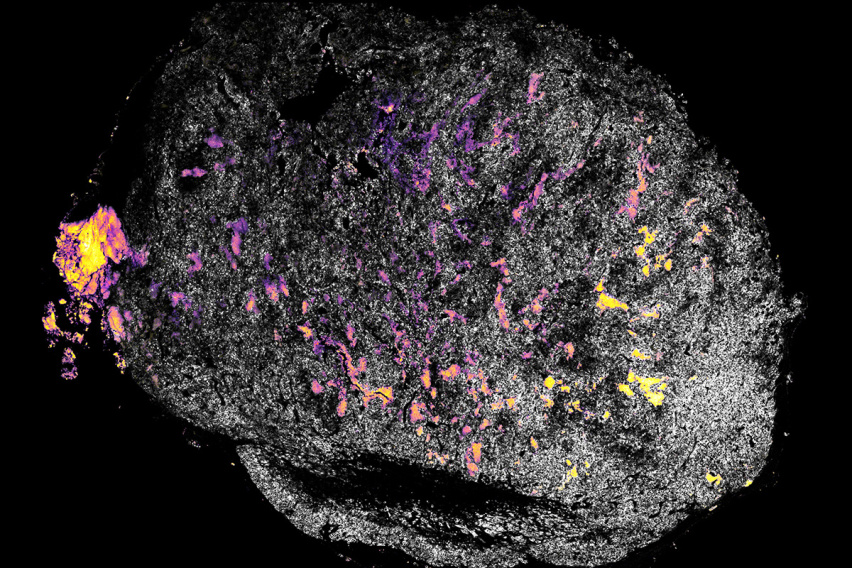
a tumor imaged after treatment, stained pink for IL12 and yellow for alum

Alum for the Ride

MIT News

Irvine and Wittrup lab researchers have developed a technique to make cytokine therapy less toxic. These immunostimulatory molecules are quite potent and can have devastating side effects if administered systemically. In a preclinical study appearing in Nature Biomedical Engineering and supported in part by the Marble Center for Cancer Nanomedicine, the researchers anchored the cytokines to tumors with aluminum hydroxide, a compound that is often used to make vaccines more effective. They then administered immune checkpoint blockade therapy, observing that the tumors were eliminated in 50 to 90 percent of the mice across three cancer types. The technology has been licensed to a startup company that hopes to begin clinical trials by the end of the year.

Filter by

Filter by Title/Description

Filter by Topic

Filter by Year

Myc Drop

Cell Chemical Biology

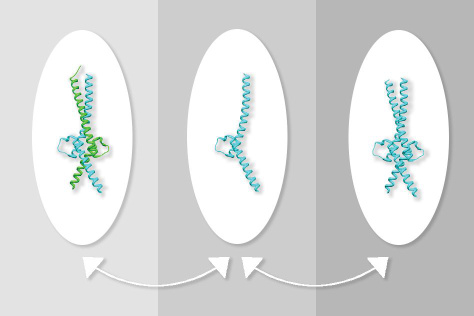
A research team led by KI faculty member Angela Koehler developed a strategy for reducing the activity of Myc, one of the most common, but notoriously difficult to target cancer-promoting genes. Scientists have tried–and failed–for decades to develop drugs that block the Myc protein, which is overexpressed in about 70% of cancers. In a study appearing in Cell Chemical Biology, researchers discovered a new compound that ties up Myc's binding partner, Max. The compound stabilizes bonds between two Max molecules, leaving unpartnered Myc molecules to be broken down within cells. The compound, which the study found to suppress tumor growth in mouse models, has been licensed by Kronos Bio for further study and development. 

Taking a Deep Dive with DOLPHIN

MIT News

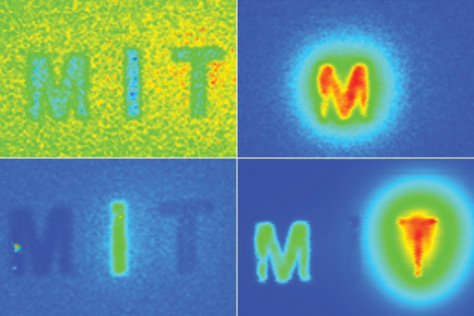
DOLPHIN, a non-invasive imaging system from the laboratories of KI faculty members Angela Belcher and Paula Hammond, uses near-infrared light to find tiny tumors no more than a few hundred cells large. In a study appearing in Scientific Reports, researchers used their imaging system to track a 0.1-millimeter fluorescent probe through the digestive tract of a living mouse. The study also showed that DOLPHIN (which stands for "Detection of Optically Luminescent Probes using Hyperspectral and diffuse Imaging in Near-infrared") can detect the probes to a tissue depth of 8 centimeters–about 5 centimeters deeper than any existing biomedical optical imaging technique. The researchers are adapting their imaging technology for early diagnosis of ovarian and other cancers that are currently difficult to detect until late stages. The study was led by Mazumdar-Shaw International Oncology Fellow Neelkanth Bardhan, and was supported by the Koch Institute Frontier Research Program and the Bridge Project. 

BE the Change You Want to See

MIT News

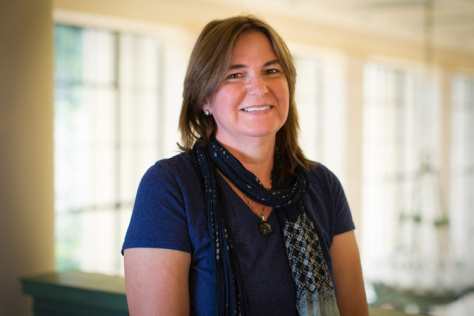
KI faculty member Angela Belcher, the James Mason Crafts Professor, will be the next head of MIT's Department of Biological Engineering (BE). Her research spans multiple areas and focuses on harnessing nature’s processes in order to design technologically important materials and devices for medicine, energy, and the environment. When Belcher's appointment begins on July 1, the MIT School of Engineering will have a record high number of women leading departments (four of eight), among them fellow KI faculty member Paula Hammond, head of the Department of Chemical Engineering and David H. Koch Professor of Engineering. Belcher's KI and BE colleague Scott Manalis, the Andrew and Erna Viterbi Professor, will support her as associate department head. 

Spectrum of Opportunity

MIT Spectrum

In an MIT Spectrum profile, KI faculty member Stefani Spranger talks about the advantages and challenges of building a lab at the forefront of cancer immunotherapy research. Like many new labs, Spranger's interdisciplinary team has the opportunity to explore a range of investigative approaches, but hasn't yet had time to build up funding, name recognition, and other resources to support them in their work. That's where an endowed professorship, such as Spranger's appointment last year as the Howard S. (1953) and Linda B. Stern Career Development Professor, can make a big difference. 

Acoustic Cell

MIT News

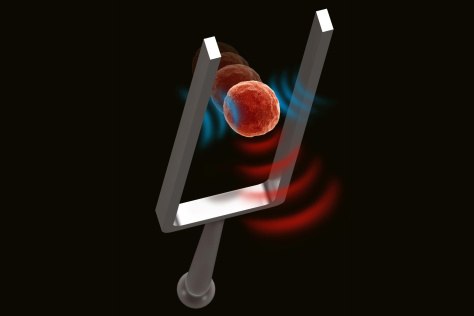
Manalis Lab researchers have devised a way to use acoustic waves to measure changes in stiffness as cells go through the cell division cycle over several generations. Appearing in Nature Methods, the technique adapts the laboratory's signature mass-measuring technology and can be used to study biological phenomena such as programmed cell death or metastasis. It could also be combined with mass and growth rate measurements to predict how individual cancer patients will respond to particular drugs. 

All That and a Bag of MicroColonyChips

MIT News

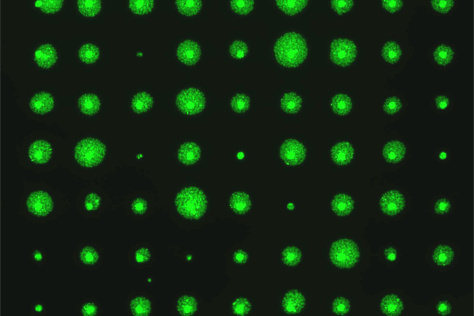
Measuring the toxic effects that chemical compounds have on cells is critical for developing cancer drugs and in fields like environmental regulation. The current gold-standard cell toxicity test, the colony formation assay, is time-consuming and labor intensive, while quicker tests sacrifice accuracy and sensitivity. The MicroColonyChip retains the sensitivity of the colony formation assay, but is fast and fully automated, delivering data in days rather than weeks. The chip was recently developed by the Engelward laboratory, in part using code developed by KI faculty member Sangeeta Bhatia and former KI postdoc and Mazumdar-Shaw International Oncology Fellow David K. Wood. The technology, described in Cell Reports, could help researchers identify and evaluate new drugs faster, advance personalized medicine applications, and support regulatory use. Leona Samson, KI faculty member emerita, also contributed to the work. 

Better Mammography through AI

New York Times

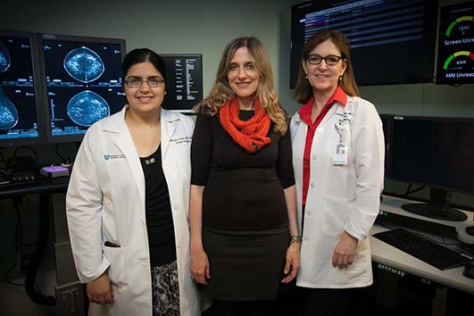
Regina Barzilay's work using AI algorithms for early detection of breast cancer was highlighted in a New York Times feature about technology and health care. With current diagnostic tools, it is difficult to determine if a suspicious lesion seen in a mammogram is high risk, benign or malignant, leading to false positive results that then lead to unnecessary biopsies and surgeries for thousands of women annually. Barzilay's system, now in use at MGH, uses machine learning to detect similarities between a patient’s breast and a database of 70,000 images for which the malignant or benign outcome was known. You can hear Barzilay talk about her work in interviews with WBUR and CNBC. Barzilay co-chairs the KI's summer symposium about machine learning and cancer on June 14.

Tortoises All the Way Down

New York Times

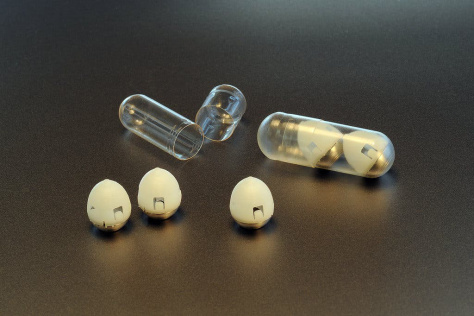
A new oral insulin delivery capsule could one day replace daily injections for people with type 1 diabetes. Developed by a team led by KI faculty member Robert Langer and longtime collaborator Giovanni Traverso, the capsule, made of stainless steel and biodegradable polymer components, injects a small needle made of compressed insulin into the stomach wall before passing harmlessly through the digestive system. To make sure that the pill lands in the correct orientation to the stomach wall, the researchers developed new device designs that were inspired by the shape of the leopard tortoise, whose angled shell ensures it can roll back on its feet no matter how it falls. In a study published in Science, researchers showed that the capsule could deliver other protein drugs that, like insulin, are too large or delicate to be absorbed undamaged by the digestive system. The team is working with Novo Nordisk to refine the technology and optimize its manufacturing process.

Sizing Up Cells

MIT News

Why are cells of the same type all the same size? In a study published in Cell, researchers in the laboratory of KI member Angelika Amon, the Kathleen and Curtis Marble Professor in Cancer Research, grew yeast and human cells to several times their normal size and found that the cells' transcription machinery could no longer make enough RNA and protein to support normal function. The team's experiments also uncovered that this process contributes to loss of cell function when cells become senescent. 

Lung Microbiome Corrupted in Cancer

MIT News

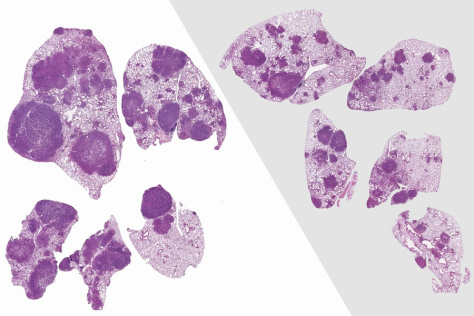
A new Cell paper from the Jacks Lab shows how lung cancer can co-opt crosstalk between the lung’s microbiome, or resident bacteria, and the immune system. Generally, resident bacteria in the lung are stable and in relatively low abundance, but in cancer, the system is disrupted. The overall population of bacteria increases, but the diversity of types of bacteria is reduced. Immune cells called gamma delta T cells proliferate and produce cytokines, or signaling molecules, ultimately promoting inflammation and tumor growth and survival. As lung bacteria become more disrupted the cycle intensifies, creating a feedback loop that supports tumor development and progression. Findings from this study have important therapeutic implications, both for breaking the feedback loop via drugs targeting key cytokines or bacterial strains and for intercepting lung cancer by managing the lung bacteria in early-stage or high-risk populations.