This is the testing/development version of the Koch Institute website.

News

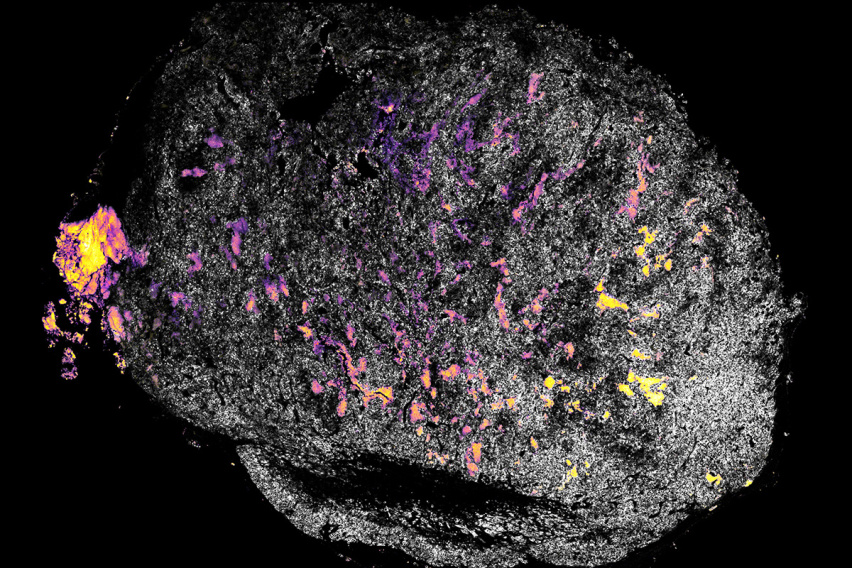
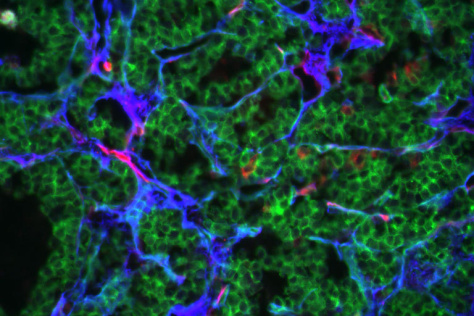
a tumor imaged after treatment, stained pink for IL12 and yellow for alum

Alum for the Ride

MIT News

Irvine and Wittrup lab researchers have developed a technique to make cytokine therapy less toxic. These immunostimulatory molecules are quite potent and can have devastating side effects if administered systemically. In a preclinical study appearing in Nature Biomedical Engineering and supported in part by the Marble Center for Cancer Nanomedicine, the researchers anchored the cytokines to tumors with aluminum hydroxide, a compound that is often used to make vaccines more effective. They then administered immune checkpoint blockade therapy, observing that the tumors were eliminated in 50 to 90 percent of the mice across three cancer types. The technology has been licensed to a startup company that hopes to begin clinical trials by the end of the year.

Filter by

Filter by Title/Description

Filter by Topic

Filter by Year

Introducing the 2019-2020 Convergence Scholars

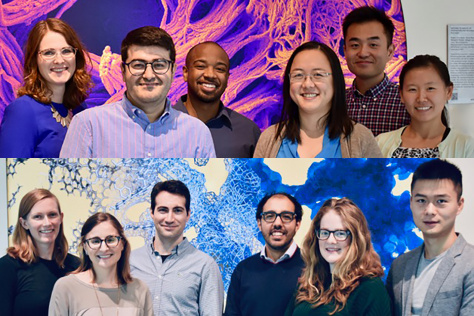
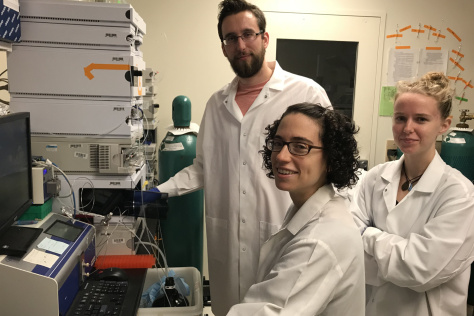
The Marble Center for Cancer Nanomedicine and the MIT Center for Precision Cancer Medicine are pleased to announce the 2019-2020 class of Convergence Scholars. The Convergence Scholars Program (CSP) provides postdoctoral trainees with opportunities to further their experiences and skills beyond the research laboratory. Scholars will learn more about science project development, policy, technology transfer, education and outreach, business and finances, industry, and the clinic.

Bhatia and Young Elected to the National Academy of Medicine

MIT News

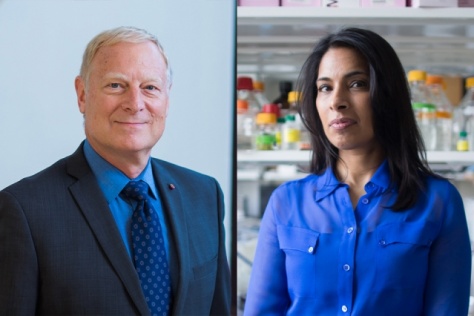
Congratulations to KI faculty members Sangeeta Bhatia and Richard Young on their election to the National Academy of Medicine. Bhatia was honored for “pioneering small-scale technologies to interface cells with synthetic platforms.” She is one of only 25 individuals who have been elected to all three National Academies—a distinction shared with fellow KI investigators Paula Hammond and Robert Langer. Young was honored "for fundamental insights into gene control in human health and disease, invention of widely used new technologies, and the development of novel therapeutics for cancer."

Golden Anniversary for Luria's Gold Medal

MIT Koch Institute

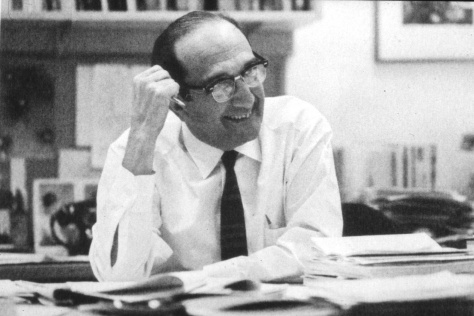
Fifty years ago, on the heels of a historic summer, microbiologist and MIT professor Salvador E. Luria learned he had just won the Nobel Prize. Shortly after the passage of the National Cancer Act of 1971 Luria successfully applied for funds to build a cancer research facility at MIT, overseeing its construction and recruiting scientists with expertise in genetics, immunology, and cell biology. As inaugural director, Luria and his founding faculty opened the MIT Center for Cancer Research in 1974, and quickly set the standard for investigating the fundamental nature of cancer.  Faculty members isolated the first human oncogene, discovered RNA splicing, and made numerous other seminal contributions to cancer biology and genetics, laying the groundwork for new methods to treat and diagnose cancer. In tribute to the individual who spearheaded the formation of the MIT’s first dedicated cancer research effort the Koch Institute is working, with friends and the MIT administration, to name the Koch Institute’s main meeting space the Salvador E. Luria Auditorium.  

Combating Resistance in Pancreatic Cancer

Cancer Research

The chemotherapy gemcitabine is among the most effective pancreatic cancer therapies, yet nearly all patients fail to respond or quickly develop resistance. A recent Cancer Research paper highlights work by the Hemann lab, in collaboration with the Vander Heiden group, to better understand how pancreatic tumor stroma—prominent fibrotic tissue that surrounds the tumor— limits gemcitabine response. Their findings implicate a metabolite known as deoxycytidine, which is secreted by stromal cells called pancreatic stellate cells, and inhibits gemcitabine processing in tumor cells. Their work suggests that reducing deoxycytidine production in the stellate cells may increase the efficacy of gemcitabine and similar therapies. This work was supported in part by a David H. Koch fellowship and the MIT Center for Precision Cancer Medicine; KI members Jacqueline Lees and Doug Lauffenburger are also senior authors. 

A Few Bad Apples

PNAS

Hynes Lab researchers present the most comprehensive analyses to date of the extracellular matrix (ECM) of pancreatic cancer. Their findings, published in Proceedings of the National Academy of Science, reveal previously unknown molecular changes during cancer progression in both mouse models and human patients and distinguish ECM proteins produced by tumor cells from those produced by stromal cells—the dense and fibrotic connective tissue that surrounds and interweaves tumors. Although stromal cell-derived proteins comprise the bulk of the tumor ECM, it is actually a set of tumor cell-derived proteins that correlate most strongly with poor patient survival. These findings may help explain why previous strategies for general depletion of the stroma added to poor patient outcomes, and suggest more precise ECM manipulations as pancreatic cancer treatments.

Holding Court

MIT News

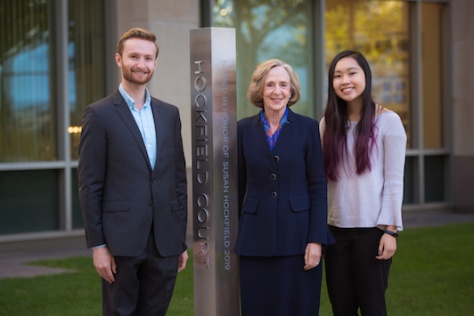
On October 4, 2019, MIT's North Court was renamed in honor of Susan Hockfield, MIT’s 16th—and first female and first life scientist—president. Festivities included a reception and a dedication ceremony with music and remarks given by Robert Millard '73, chairman of the MIT Corporation, James Champy '63 SM '65, lifetime member emeritus of the MIT Corporation, and Paula Hammond '84 PhD '93, the David H. Koch (1962) Professor of Engineering and head of the Department of Chemical Engineering. Among the many achievements noted was the establishment of the Koch Institute for Integrative Cancer Research. Hockfield's advocacy for the convergence of biology and engineering helped lay the foundation for this building—which, as Hammond pointed out, is the site with the highest rate of intra-MIT co-authorship as well as the top inventing building on campus. We are grateful for Hockfield's championship and proud that our "backyard" will bear her name.

Photo credit: Gretchen Ertl

KI Executive Director Steps Down

MIT Koch Institute

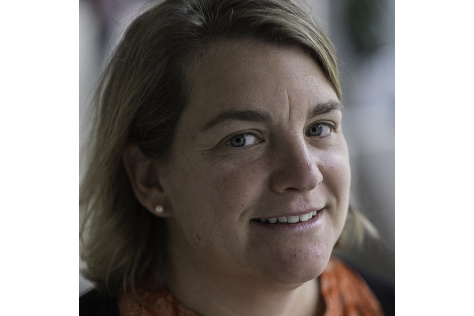
Anne Deconinck bids farewell to the Koch Institute, where she has served as Executive Director for seven years. In this role, Deconinck has overseen various outreach efforts including external collaborations, industrial and clinical partnerships, communications, and community building. Throughout her 17-year tenure in research administration at MIT, she has been a dedicated proponent of interdisciplinary research approaches and basic science. Deconinck is leaving to pursue new opportunities in industry. A search for the next Executive Director will commence this fall.

Vaccine with a Double STING

MIT News

A new vaccine from the laboratory of KI faculty member Daniel Anderson targets mRNA to immune cells using lipid nanoparticles. The nanoparticles, described in Nature Biotechnology, protect antigen-coding mRNA from breaking down in the injection site and guide the payload to antigen-presenting immune cells that will in turn attract and stimulate T cells and other immune cells. Further, the lipid polymers themselves boost T cell activity by activating the STING (stimulator of interferon genes) pathway. The team is working to build a library of additional immune-stimulating nanoparticle structures and screen them to identify the designs that best boost the vaccine’s effectiveness against individual cancers and other diseases.

A Triple Threat

Upworthy

KI member and Marble Center for Cancer Nanomedicine director Sangeeta Bhatia talks with Upworthy about her uphill climb through the worlds of engineering, medicine, and entrepreneurship, and her continued commitment to pushing boundaries as a scientist and mentor. Bhatia discusses the challenges of increasing the number of women in the STEM pipeline and credits early flexible support with helping her balance the demands the challenges of starting an ambitious research program and a new family.

Trailblazers of Glory

Xconomy

KI faculty member Regina Barzilay won “Digital Trailblazer” at the 2019 Xconomy Awards in Boston for her widely reported work using AI algorithms for early detection of breast cancer. Now in use at MGH, the deep-learning system can predict from a mammogram if a patient is likely to develop breast cancer as many as five years in advance.

Also of note, friend of the KI Linnea Olson won Xconomy’s “Patients First” award for her advocacy of patient-centered approaches to drug discovery and development. Olson was a patient of Jacks Lab alumna and former Charles W. and Jennifer C. Johnson Clinical Investigator Alice Shaw, and in 2013 shared with the KI community her experience with stage IV lung cancer and clinical trials.

Congratulations to both!