This is the testing/development version of the Koch Institute website.

News

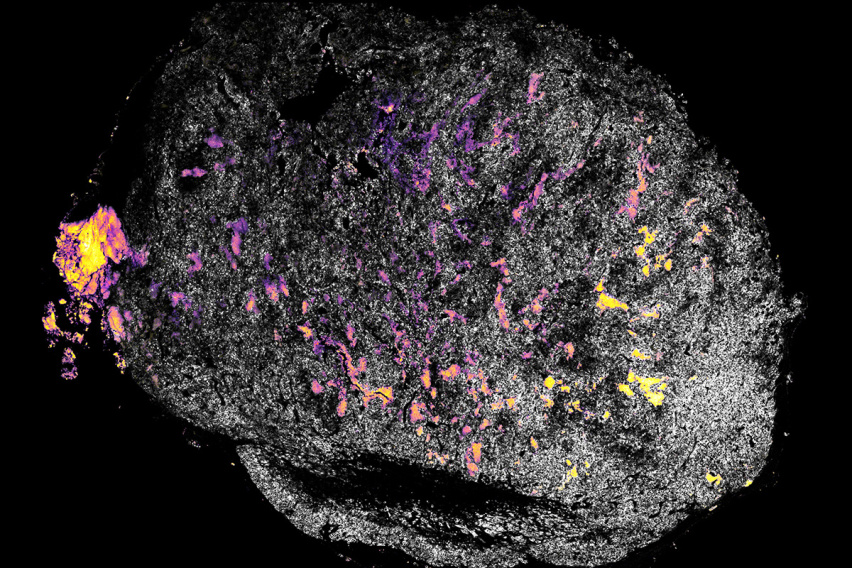
a tumor imaged after treatment, stained pink for IL12 and yellow for alum

Alum for the Ride

MIT News

Irvine and Wittrup lab researchers have developed a technique to make cytokine therapy less toxic. These immunostimulatory molecules are quite potent and can have devastating side effects if administered systemically. In a preclinical study appearing in Nature Biomedical Engineering and supported in part by the Marble Center for Cancer Nanomedicine, the researchers anchored the cytokines to tumors with aluminum hydroxide, a compound that is often used to make vaccines more effective. They then administered immune checkpoint blockade therapy, observing that the tumors were eliminated in 50 to 90 percent of the mice across three cancer types. The technology has been licensed to a startup company that hopes to begin clinical trials by the end of the year.

Filter by

Filter by Title/Description

Filter by Topic

Filter by Year

Here Be Dragonfly

MIT Koch Institute

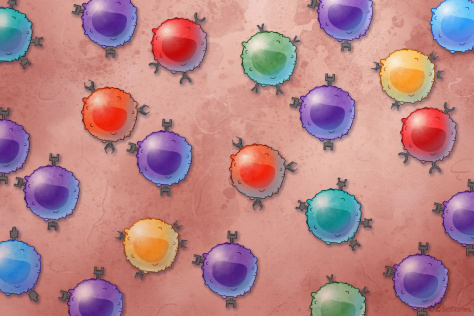
Dragonfly, co-founded by KI director Tyler Jacks, launched its first clinical trial, a study of multiple solid tumor types, with a drug candidate called DF1001; the drug is the first from its TriNKET™ platform of NK cell-based immunotherapies to move into humans. The company also entered a partnership with AbbVie to help commercialize other candidates in its pipeline.

Drop Some Knowledge

Glimpse Podcast

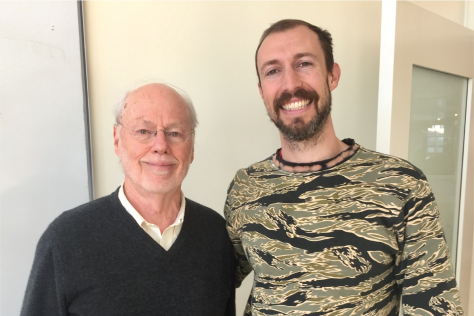
KI faculty member and Nobel Laureate Phil Sharp makes biological “supercomplexes” a little less complex in the first installment of the GLiMPSE podcast’s “Living Droplets” series. Droplet technology is the focus of a new research partnership between KI startup Dewpoint Therapeutics and Bayer.

A Means to an End

MIT News

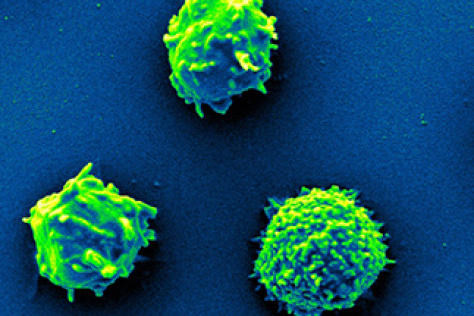
The Love and Shalek labs devised a high throughput single-cell RNA sequencing method for identifying T cells that share a particular target. Conventional RNA sequencing reads only one end of an RNA molecule. Yet, the variable sequences encoding for T cell receptors (TCR), which bind to receptors on target cells, reside on the other end. The new method, published in Nature Immunology and partly supported by the Bridge Project, complements the conventional approach by amplifying TCR-encoding RNA molecules labeled for their T cells of origin, then pulls and sequences them. The study identified T cells that produce inflammation in peanut allergies, but the technique can be applied to a variety of T cell responses, including patient responses to cancer immunotherapies.


Best in Shaw

Endpoints News

Jacks lab alum and former Charles W. and Jennifer C. Johnson Clinical Investigator Alice Shaw was profiled by Endpoints News as one of 20 extraordinary women in biopharma R&D. A pioneer of targeted treatments for lung cancer, Shaw will apply her experience as an MGH physician and Harvard Medical School professor in her new role as chief of translational clinical oncology at Novartis Institutes for BioMedical Research. 

Going Chiral

MIT News

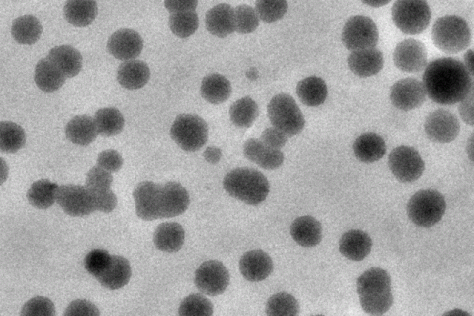
Controlling chirality—the so-called “handedness” of a molecule’s structure—improves the performance of drug-delivering nanoparticles, according to new research from the Langer Lab. The Advanced Materials study showed that when coated in the “right-handed” form of amino acid cysteine, nanoparticles avoided destruction by enzymes and penetrated cancer cells more easily.

Transforming Early Detection: More Than Meets the A.I.

MIT Koch Institute

KI member and computer scientist Regina Barzilay spoke with The New York Times and PBS’s FRONTLINE about how her own breast cancer diagnosis inspired her to use machine learning tools to empower physicians and patients alike. Working with physician Connie Lehman, Barzilay’s A.I. systems are improving mammography and enabling earlier detection—and prediction—of the disease.

Lumicell Hits the Home Stretch

MIT Koch Institute

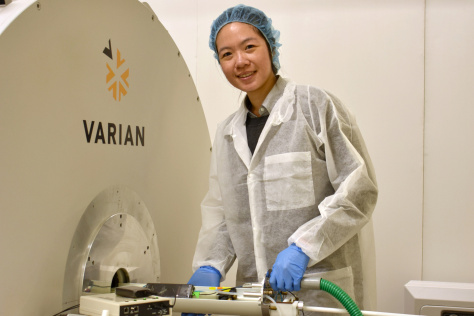
KI startup Lumicell launched a pivotal trial for its Lumicell Imaging System, a final step toward FDA approval for the innovative image-guided cancer surgery technology. Supported early on by the Koch Institute Frontier Research Program through the Kathy and Curt Marble Cancer Research Fund, the system was developed by KI member Linda Griffith, with MIT collaborator Moungi Bawendi and former KI administrator W. David Lee ’69. Lumicell’s system pairs an injectable contrast agent with a hand-held, single-cell resolution imager to scan surgical margins for residual cancer cells. Proprietary software produces real-time images that help surgeons take immediate action to prevent repeat surgeries, lower healthcare costs, and improve patient outcomes.

New Target for Small Cell Lung Cancer

MIT News

Researchers in the Jacks and Vander Heiden labs identified a new therapeutic target for small cell lung cancer (SCLC), an especially aggressive form of lung cancer with limited options for treatment. In a study appearing in Science Translational Medicine and featured in the NIH Director's Blog, the team used genetic screens to search for SCLC targets that could be tested relatively quickly and easily in a clinical setting. Researchers discovered a metabolic vulnerability to the loss of DHODH, a key enzyme in the pyrimidine synthesis pathway. They also found that a DHODH inhibitor brequinar—already approved for use in patients as an immunosuppressant—slowed tumor progression and increased survival in SCLC mouse models and was effective in treating two of four patient-derived small cell lung cancer tumor models. The study was funded in part by the MIT Center for Precision Cancer Medicine.

Cell-based Therapy Squeezes into Human Trials

MIT Koch Institute

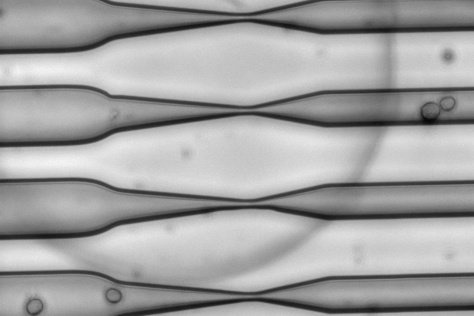
Paving the way for SQZ Biotech’s first human trial, the FDA accepted the company’s IND application for a cell-based therapeutic vaccine to treat HPV-positive tumors, including reproductive and head and neck cancers. SQZ’s therapies, based on research by the KI’s Langer and Irvine labs, with MIT collaborator Klavs Jensen, activate the immune system against cancer. SQZ’s signature CellSqueeze device opens a temporary hole in a cell membrane through which materials can pass, in this case inserting tumor-associated antigens into peripheral blood mononuclear cells (PBMCs). Proof-of-concept studies demonstrating the potential of both the device and a strategy using B-cells (one type of PBMC) were supported by the Koch Institute Frontier Research Program through the Kathy and Curt Marble Cancer Research Fund.

Bhatia’s Biomarkers Bring Insight to the Clinic

Business Wire

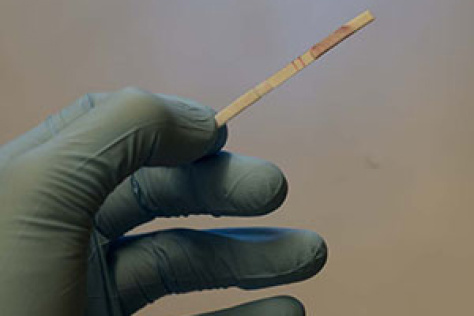
Glympse Bio, founded by Sangeeta Bhatia, will move its early detection and monitoring strategy into patients as part of Gilead’s NASH clinical program. The Bhatia lab’s activity-based nanosensors for cancer, fibrosis, and other conditions release synthetic urinary biomarkers into the body when they encounter diseased cells. Developed in part with support from the Koch Institute Frontier Research Program, they will help determine disease stage and treatment responses in real time. NASH, or non-alcoholic steatohepatitis, is an advanced form of fatty liver disease linked to obesity and a major risk factor for liver cancer, for which there are few treatment options.