This is the testing/development version of the Koch Institute website.

News

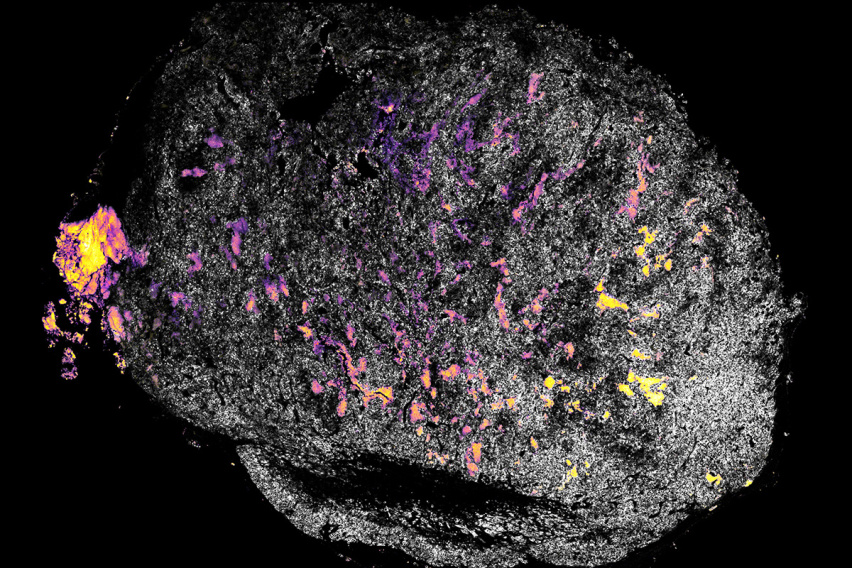
a tumor imaged after treatment, stained pink for IL12 and yellow for alum

Alum for the Ride

MIT News

Irvine and Wittrup lab researchers have developed a technique to make cytokine therapy less toxic. These immunostimulatory molecules are quite potent and can have devastating side effects if administered systemically. In a preclinical study appearing in Nature Biomedical Engineering and supported in part by the Marble Center for Cancer Nanomedicine, the researchers anchored the cytokines to tumors with aluminum hydroxide, a compound that is often used to make vaccines more effective. They then administered immune checkpoint blockade therapy, observing that the tumors were eliminated in 50 to 90 percent of the mice across three cancer types. The technology has been licensed to a startup company that hopes to begin clinical trials by the end of the year.

Filter by

Filter by Title/Description

Filter by Topic

Filter by Year

We Built This Laboratory on 'Doc and Roll

Nature

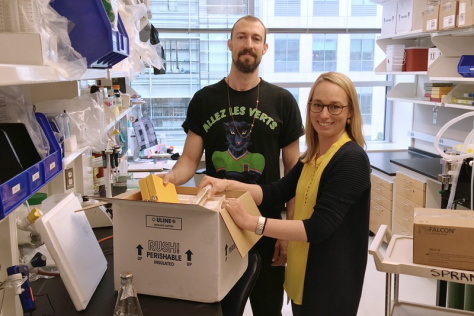
What's it like to begin your career in a brand new laboratory? Nature spoke with KI postdoctoral scholar Timothy Fessenden and his advisor, KI faculty member and cancer immunology rockstar Stefani Spranger, about building a lab from the ground up. The process, they say, is not immune to challenges but both PI and postdoc are ready to roll out new research and keep learning from each other along the way. 

Slow Down, You Grow Too Fast

MIT News

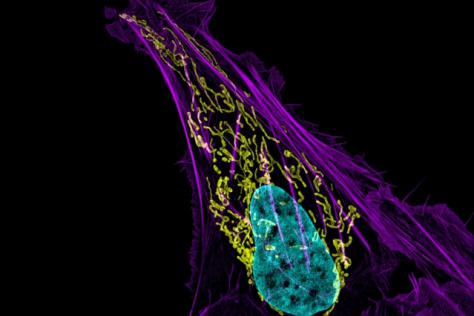
Researchers in the laboratory of KI associate director and MIT Center for Precision Cancer Medicine member Matthew Vander Heiden are looking at aspartate as a limiting nutrient for cancer cells and feeling groovy. Their latest paper, published in Nature Cell Biology and further covered in Nature News & Views, explains how and why this amino acid is important for cell proliferation and argues that targeting aspartate production may reduce the growth of some tumors. 

Deep Thoughts on Drug Delivery

Institute for Medical Engineering and Science

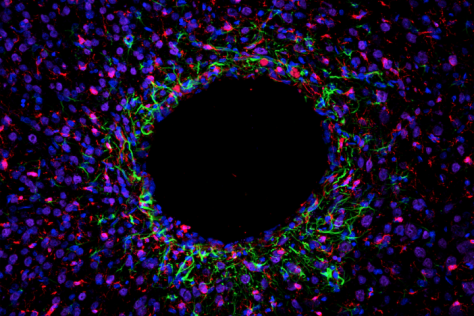
Chronically implanted microprobes developed in the KI's Cima and Langer Labs, in collaboration with the Graybiel Lab, show great promise for targeted drug delivery in the brain.

The Unstoppable Nancy Hopkins

MIT News

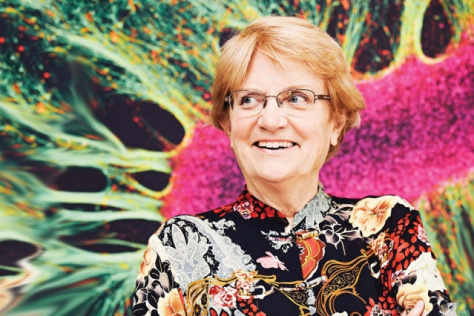
KI member and MIT Professor Emerita Nancy Hopkins may be officially retired, but she is not slowing down. After co-authoing a review of the molecular mechanisms of the preventable causes of cancer in the United States for Genes & Development, she sat down with MIT News to share her perspective on the impact and potential of cancer prevention. On September 5, Hopkins will be honored with the 2018 Xconomy Lifetime Achievement Award for her contributions to genetics, cancer research, and gender equity in science.

Weight For It

MIT News

The KI's Vander Heiden Lab, in collaboration with researchers and clinicians at Dana-Farber Cancer Institute, is exploring the connections between pancreatic cancer and weight loss. As seen in Nature, the team looked at tissue wasting mechanisms in mice with early stage tumors and found that loss of pancreatic digestive enzymes can contribute to early weight loss in pancreatic cancer. They also examined blood samples and clinical data from more than 700 pancreatic cancer patients, determining that tissue loss does not necessarily correlate with lower survival rates and suggesting that detecting such tissue loss could lead to earlier diagnosis. The work was supported in part by the Koch Institute Frontier Research Program through the Kathy and Curt Marble Cancer Research Fund and the MIT Center for Precision Cancer Medicine. Get the breakdown from MIT News, Nature News & Views, and STAT.

Pushing BBBoundaries, Crossing BBBarriers

MIT News

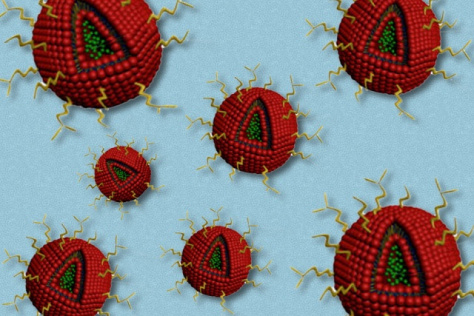
Blood brain barrier getting in the way of brain cancer treatment? Na-no problem! A collaborative effort between the laboratories of Paula Hammond, a David H. Koch Professor in Engineering and head of MIT's Department of Chemical Engineering, Michael Yaffe, the David H. Koch Professor of Science and director of MIT's Center for Precision Cancer Medicine, and former Charles W. and Jennifer C. Johnson Clinical Investigator Scott Floyd has yielded a layered nanoparticle coated with a protein known as transferrin that can pass through the blood brain barrier to deliver a targeted one-two punch to glioblastoma tumor cells. Mice treated with these transferrin-coated nanoparticles survived for twice as long as mice that received other treatments. The work is described in Nature Communications and was supported in part by the Koch Institute Frontier Research Program, a KI Quinquennial Cancer Research Fellowship, and the Bridge Project.

The Boom Where It Happens

MIT Koch Institute

What is progress and how does it come to be? Journalist Karen Weintraub went behind the scenes of Kendall Square's "Bio Boom" on WBUR's Common Health, speaking with KI members Susan Hockfield and Eric Lander, and Frequency Therapeutics CEO David Lucchino, about what makes our local neighborhood, the Heart of Biotech, so special, and what the sector can do to sustain this dynamic trajectory of growth. In a separate feature, she spoke with KI member Robert Langer and others about the ups and downs of life in the biotech startups fastlane.

Boston Globe correspondent Scott Kirsner examined the past, present, and future to unravel the secret to Boston's innovation economy. KI member and biotech guru Phillip Sharp, also heard on WBUR discussing how Kendall Square became the epicenter of the biotech world, was among those interviewed.

Get a Life (Science, That Is!)

MIT Koch Institute

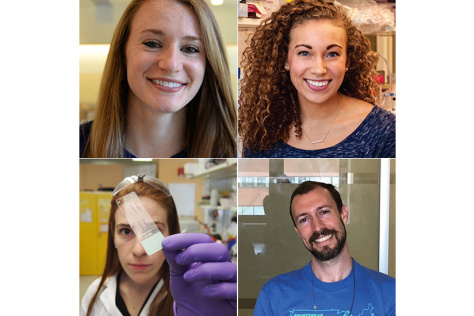
Curious about the scientific endeavor? Looking for some pre-summer reading or listening? Sit down with brand new Whitehead Institute Fellow Kristin Knouse, a recent alumna of the Amon Lab (and 2014 Image Awards winner), as she talks fundamental biology with Tabula Synthase and shares lessons learned from her MD/PhD journey. Or, join KI graduate student Lauren Stopfer on the GLiMPSE podcast (fun fact: Spranger Lab postdoc Tim Fessenden is one of the new co-hosts!) to share insights about her work in the White Lab, graduate admissions at MIT, and what it means to "look like a scientist." Finally, get to know immunologist Kaitlyn Sadtler, a current Image Awards winner, Marble Center for Cancer Nanomedicine Convergence Scholar, TED Fellow, and postdoc in the Anderson/Langer lab through her interview with The Female Scientist, offering reflections and advice for aspiring scientists and engineers. From success to failure, confidence to doubt, and everything in between, their stories are sure to inspire, educate, and engage. And, for more "I knew them when" stories, check out this video from Dickinson College, featuring new Jacks Lab technician Grace Crossland.


Ligands, Microarrays, Action!

Endpoints

Rising pharmaceutical star Kronos Bio has signed a major deal with biotech celebrity Norbert Bischofberger, booking him as the inaugural CEO for their big screen debut. And when we say "big screen," we mean it. Building on the high-throughput screening techniques developed in the laboratory of founding scientist and KI member Angela Koehler, the company aims to discover and develop novel therapies to target the most intractable and challenging cancer targets—the so-called "undruggable" transcription factors. With their stellar crew and private lot in Lab Central, Kronos Bio is well poised to be a therapeutic blockbuster.

Intestinal Stem Cells: The Next Regeneration

MIT News

How does fasting affect recovery from GI illness? A new study from the laboratories of KI members Ömer Yilmaz and David Sabatini reveals that fasting can change intestinal stem cells' metabolism and improve their ability to regenerate after infection or other gastrointestinal distresss. These results, obtained in mice and published in Cell Stem Cell, suggest potential interventions for at-risk individuals such as older people recovering from GI infections or cancer patients undergoing chemotherapy. The research was supported in part by the MIT Stem Cell Initiative through Fondation MIT and the Koch Institute Frontier Research Program through the Kathy and Curt Marble Cancer Research Fund.