This is the testing/development version of the Koch Institute website.

News

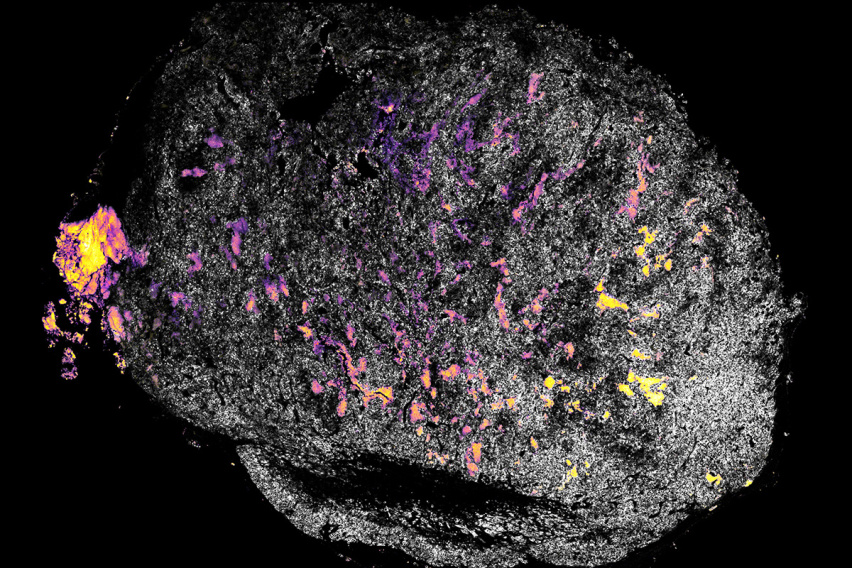
a tumor imaged after treatment, stained pink for IL12 and yellow for alum

Alum for the Ride

MIT News

Irvine and Wittrup lab researchers have developed a technique to make cytokine therapy less toxic. These immunostimulatory molecules are quite potent and can have devastating side effects if administered systemically. In a preclinical study appearing in Nature Biomedical Engineering and supported in part by the Marble Center for Cancer Nanomedicine, the researchers anchored the cytokines to tumors with aluminum hydroxide, a compound that is often used to make vaccines more effective. They then administered immune checkpoint blockade therapy, observing that the tumors were eliminated in 50 to 90 percent of the mice across three cancer types. The technology has been licensed to a startup company that hopes to begin clinical trials by the end of the year.

Filter by

Filter by Title/Description

Filter by Topic

Filter by Year

A Day in the Langer Life

MIT News

Juggling his roles as engineer, professor, entrepreneur, and inventor — KI member and David H. Koch Institute Professor Robert Langer is always on the go. In this day-in-the-life video, produced by MIT's School of Engineering and MIT's Department of Chemical Engineering, Langer takes viewers behind the curtain to learn more about how his interest in chemisty and fascination with magic propels him to keeping learning and discovering through chemical engineering.

Hammond Wins ACS Award in Applied Polymer Science

Chemical and Engineering News

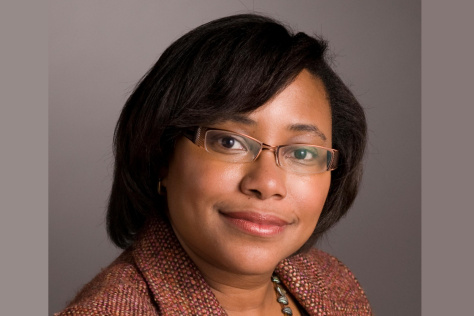
In March, Paula Hammond, KI member and David H. Koch Professor of Engineering, received the American Chemical Society (ACS) Award in Applied Polymer Science at the ACS National Meeting in New Orleans. Hammond, also the head of MIT's Department of Chemical Engineering, was honored for her contributions to the fields of polymer and polymer materials research. Also recognized at the ACS National Meeting was KI member Angela Belcher, who gave the Fred Kavli Innovations in Chemistry Lecture at the event.

Langer Lab Alumna Named Gates Cambridge Scholar

MIT News

From Cambridge Mass to Cambridge UK — former Langer Lab UROP June Park has been selected as a 2018 Gates Cambridge Scholar and will be heading across the pond to earn a PhD in bioengineering at Cambridge University. During her time in the Langer Lab, Park helped develop ultrasound-mediated colonic drug-delivery device, which became the platform technology for KI startup Suono Bio. She is currently an associate consultant at Putnam Associates, where she helps generate and deliver strategic recommendations for global biopharmaceutical and biotechnology companies. We're sure that she'll be applying her keen sense of both business and engineering as she takes on this next opportunity. Congratulations!

Advancing New Bodies of Knowledge

MIT News

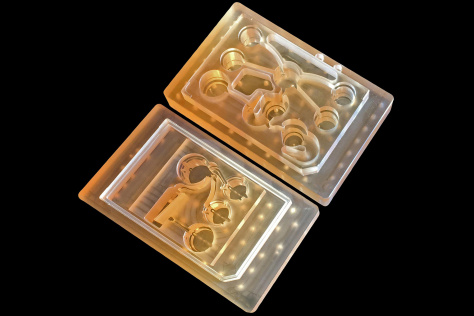
Researchers from the laboratory of KI member Linda Griffith have engineered a new "body on a chip" technology that could be used to accurately test the efficacy of drugs before they're administered to humans. The technology, a microfluidic platform that connects engineered tissues from organs, can replicate human organ interactions for an extended period of time, allowing researchers to learn how various parts of the body react to the drug being tested. An image of previous work from this project was showcased in the 2017 Koch Institute Image Awards Exhibition.

Winter Blues No Match for Reviews

MIT Koch Institute

Late-winter weather got you down? Curl up fireside with one of two new KI research reviews. In Nature Reviews Cancer, Stefani Spranger, the Howard S. (1953) and Linda B. Stern Career Development Professor, helps uncover the mystery behind which tumors respond to cancer immunotherapies called checkpoint blockades, and how activation of certain signaling pathways in tumor cells can impair local antitumor immune responses.

Mystery not your genre? ACS Nano recently featured a page-turner by members of the Langer lab and their collaborators describing recent advances in drug delivery, materials science, and nanotechnology to develop next-generation nanoparticle platforms to overcome barriers for delivery of TRAIL. TRAIL is an immune molecule that has received significant attention as a cancer therapeutic because it can selectively trigger cancer cell apoptosis — or cell suicide — without causing toxicity, but creating viable delivery systems is no linear plot. The team has received support from the S. Leslie Misrock (1949) Fund for Cancer Nanotechnology, the Bridge Project, and the Marble Center for Cancer Nanomedicine.

Adjuvantageous Approach Boosts Ovarian Cancer Survival

Bioengineering and Translational Medicine

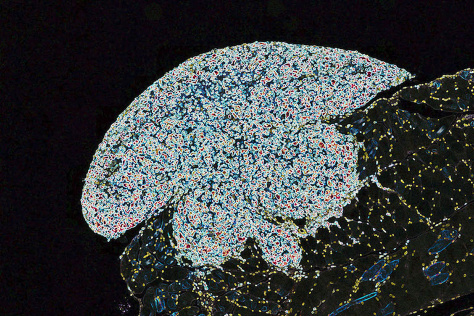
A new adjuvant (or auxiliary) therapy developed in the Hammond and Yaffe laboratories shows great promise for improving outcomes against ovarian cancer. The team's RNA-peptide nanoplexes, described in Bioengineering & Translational Medicine, profoundly sensitized mice with aggressive ovarian tumors to standard chemotherapy, extending median survival by 37% over chemotherapy alone and decreasing metastatic spread to the lungs, all without observable side effects. The nanoplexes — tiny conjugates of gene-silencing siRNA and protective peptides — block the MK2 cell signaling pathway, which several cancers use to resist the effects of chemotherapy. Studies of this approach are underway in additional tumor types and more advanced models. This work, featured in the 2017 KI Image Awards exhibition, is a classic example of the KI’s convergence-driven cancer research: the Yaffe Lab previously showed that shutting down MK2 makes tumors more responsive to chemotherapy, and absent a suitable small molecule inhibitor of MK2, they turned to siRNA and enlisted help from the Hammond Lab to protect and deliver it. The research was supported in part by the Charles and Marjorie Holloway Foundation, by the S. Leslie Misrock (1949) Frontier Research Fund for Cancer Nanotechnology, and by a Department of Defense Ovarian Cancer Teal Innovator Award to Hammond.

Fresh Faces of Biology at MIT

MIT Koch Institute

Course 7, biology, is a staple of the MIT undergraduate experience and the academic home to many Koch Institute researchers. The Biology Department's newly updated website offers fresh perspectives from students and researchers shaping the future of cancer research and human health. Take, for example, Alissandra Hillis, an undergraduate in the Vander Heiden Lab whose current investigations of cancer metabolism are rooted in childhood curiosity and her own family's encounters with the disease. Hillis's time at MIT has led her down the paths of both translational and policy-based work. Similarly, undergraduate Courtney Diamond, former Irvine Lab researcher and advisee of KI member Robert Horvitz, is combining both personal and professional interests to shape her anticipated career in public health. On the flip side, graduate student Faye-Marie Vassel has shifted her focus away from science policy to a more hands-on study of cancer biology, thanks in part to her early forays into science outreach and her current studies of chemotherapy resistance in the KI's Hemann and Walker laboratories. Likewise, undergraduate Elizabeth Li has been inspired from her time in three different cancer-related labs—including the Yilmaz and Lees labs—to one day start her own. Finally, graduate student Zhaoqi Li describes how multidisciplinary and multicultural experiences led him to the Vander Heiden Lab to study how cancer cells fuel their growth. We are sure that all five of these researchers, along with others featured in graduate, undergraduate, and postdoctoral testimonials, will continue to push boundaries and uncover fundamental truths, as a matter of course.


Cima Appointed to School of Engineering Leadership

MIT News

Michael Cima, KI member and David H. Koch Professor of Engineering, has been named the new co-director of MIT's Innovation Initiative and associate dean of innovation for the School of Engineering. A successful entrepreneur and acclaimed materials sciences researcher, Cima has served in various leadership positions throughout his tenure at MIT, including an ongoing appointment as faculty director of the Lemelson-MIT Program. This triad of industry, research, and administrative leadership experience make Cima a natural choice for these new positions. Congratulations and may the force of innovation be with him! Read more.

Making What's Old New Again

MIT Technology Review

KI Associate Director and Associate Professor of Biology, Matthew Vander Heiden, is bringing metabolism back to the forefront of cancer research. In a new profile, MIT Technology Review details Vander Heiden's path to a career focus on the once-neglected research area of cell metabolism and his role in its revival as one of today's most promising avenues for treating cancer and other diseases. 

Hockfield Talks Convergence at AAAS

American Association for the Advancement of Science

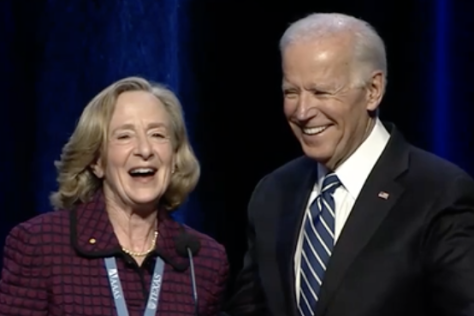
At this year's American Association for the Advancement of Science (AAAS) annual meeting, convergence was the hot topic as discussion focused on accelerating science and technology to meet the needs of 9.5 billion people by 2050. Prior to the meeting, MIT President Emerita and KI member, Susan Hockfield, wrote an editorial for Science titled "Our science, our society" that stressed the importance of investing in science to advance technology. She also delivered her final address as AAAS President on how 21st century innovation will be driven by the convergence of scientific disciplines. Plenary speakers included 2017 KI summer symposium panelist Cori Bargmann and former U.S. Vice President Joe Biden.