This is the testing/development version of the Koch Institute website.

News

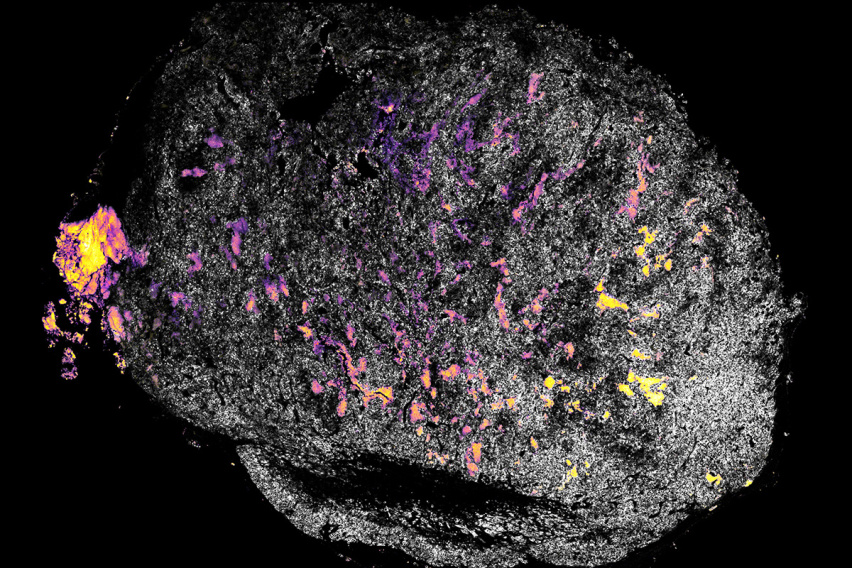
a tumor imaged after treatment, stained pink for IL12 and yellow for alum

Alum for the Ride

MIT News

Irvine and Wittrup lab researchers have developed a technique to make cytokine therapy less toxic. These immunostimulatory molecules are quite potent and can have devastating side effects if administered systemically. In a preclinical study appearing in Nature Biomedical Engineering and supported in part by the Marble Center for Cancer Nanomedicine, the researchers anchored the cytokines to tumors with aluminum hydroxide, a compound that is often used to make vaccines more effective. They then administered immune checkpoint blockade therapy, observing that the tumors were eliminated in 50 to 90 percent of the mice across three cancer types. The technology has been licensed to a startup company that hopes to begin clinical trials by the end of the year.

Filter by

Filter by Title/Description

Filter by Topic

Filter by Year

Expand and Contract: SQZ Biotech Advances Immunotherapy

MIT News

SQZ Biotech, whose initial application of cell-squeezing technology to enhance production of antigen presenting cells for immunotherapy was a KI Frontier Research Program spin-out, recently announced the expansion of its partnership with Roche Pharmaceuticals. The combination of the startup's “CellSqueeze” microfluidic device and Roche's clinical oncology expertise will accelerate the development of cell-based immunotherapies for cancer, the first of which is expected to enter clinical trials in mid-2019. A recent paper in PNAS compares the use of cell squeezing to electroporation for intracellular delivery of immune engineering agents. SQZ CEO and former KI postdoc Armon Sharei spoke with MIT News about the goals and history of the company's groundbreaking technology.

Angelika Amon Wins 2019 Breakthrough Prize in Life Sciences

MIT News

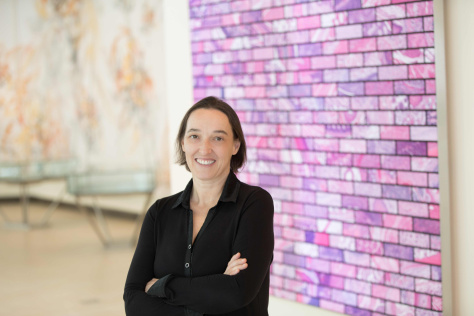
The Koch Institute is proud to congratulate Angelika Amon, Kathleen and Curtis Marble Professor in Cancer Research, on winning the 2019 Breakthrough Prize in Life Sciences. Amon’s trailblazing work provided critical insights into the molecular mechanisms governing chromosome segregation and mis-segregation as well as the impact of aneuploidy on normal cells and tumor formation. Amon accepted the award at a ceremony hosted by Pierce Brosnan in November at NASA Ames Research Center in Mountain View, California. Read more at the Boston Globe and the Boston Herald, or watch Amon's red carpet interview. We are also pleased to add that Amon was named the recipient of the 2018 Vanderbilt Prize in Biomedical Science by the Vanderbilt University Medical Center, likewise for her work on chromosome segregation. The prize is given annually to honor and recognize a woman scientist of national reputation who has a stellar record of research accomplishments and is known for her mentorship of women in science. Amon will accept her award and deliver the Flexner Discovery Lecture at Vanderbilt University on Thursday, January 31, 2019.

League of Xtraordinary Gentlewomen (and Bob)

MIT Koch Institute

Congratulations to our 2018 Xconomy Awards winners!

KI member Angela Belcher, the James Mason Crafts Professor, won the Innovation at the Intersection Award for using materials science and nanotechnology to create cancer imaging agents that could one day help surgeons find and remove small tumors that they currently can’t see during surgery.

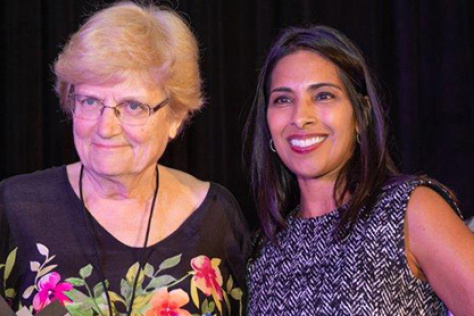
Nancy Hopkins, KI member and MIT Professor Emerita, won a Lifetime Achievement Award for her pioneering research on tumor-causing viruses and the genes controlling vertebrate development, as well as her pioneering use of a tape-measure as an elegant tool for fighting gender discrimination in science. Hopkins also interviewed with Scientific American about the recent Nobel wins for Frances H. Arnold and Donna Strickland and her hopes for the recognition of female achievement in science in the future.

The Human Cell Atlas (HCA), a project co-chaired by KI member Aviv Regev that aims to map out all human cell types and their interactions, was named Xconomy’s 2018 Big Idea. Read more about Regev and the HCA at MIT Technology Review and Wired.

The Xconomy winners received their awards as part of Biotech Week Boston, during which KI member and MIT President Emerita Susan Hockfield gave a keynote address on the convergence of biology and engineering in the 21st century, and Robert Langer, David H. Koch Institute Professor, had a fireside chat with Lyndra co-founder and CEO Amy Schulman on high impact ideas and use-inspired research.

Of Mice and Mentorship

MIT News

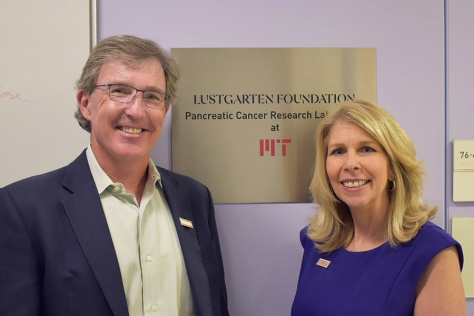
From the humble beginnings of the KPC mouse model to cutting-edge developments in gene editing and immunology, the Jacks Lab has always been a place where innovation happens. On September 21, the Lustgarten Foundation honored the lab with a significant investment to advance several key areas of pancreatic cancer research and promote collaboration across MIT. The newly dedicated Lustgarten Laboratory for Pancreatic Cancer Research at MIT will focus on understanding the immunological factors and genetic events that contribute to pancreatic tumors' development, on using organoids and single cell analysis to test new strategies for early detection and treatment, and on bringing new researchers into the fold. 

Yilmaz Wins AAAS Award

American Association for the Advancement of Science

Congratulations to KI member and Assistant Professor of Biology Ömer Yilmaz for being named a winner of the 2018 AAAS Martin and Rose Wachtel Cancer Research Award! The award honors early-career investigators who have performed outstanding work in the field of cancer research. Yilmaz was selected along with Neville Sanjana, a Core Faculty Member at the New York Genome Center and Assistant Professor at New York University. Both awardees will deliver a public lecture on their research and have their award-winning essays published in Science Translational Medicine. 

Function Junction

Cell Systems

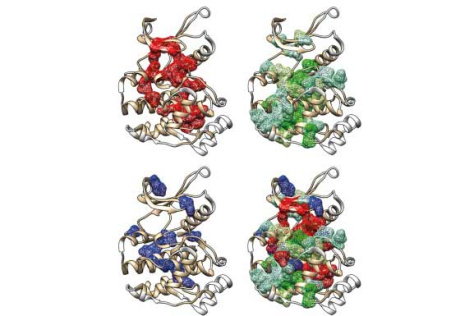
A recent study from the Yaffe Lab and MIT Center for Precision Cancer Medicine, published in Cell Systems, investigates a subset of more than five hundred human proteins, known as protein kinases, that critically contribute to cancer. Whereas all protein kinases share a common core function, namely phosphorylation of their substrates, the study reveals how different kinases evolved functional diversity by mutating groups of specific amino acid residues (conceptually considered to be the building blocks of proteins). Further investigation using a combination of computational and experimental methods reveals that certain known cancer mutations may be changing protein kinase function by targeting these specific groups of amino acid residues. The team's findings present both an explanation for the mechanisms behind the functional diversity of protein kinases and developing avenues for the understanding of, and potential therapeutic intervention against, key cancer mutations.

Speedy Delivery

MIT News

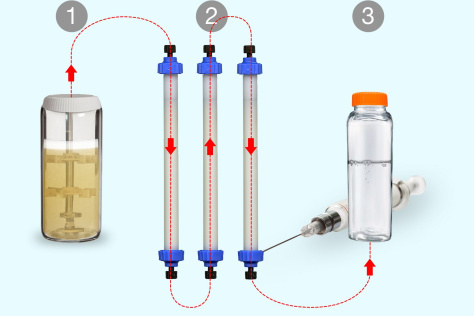
It's a beautiful day in the Love Lab, where researchers have developed a new way to rapidly manufacture small quantities of biopharmaceuticals on demand. The modular system is small enough to fit on a lab bench, switches easily between producing different drugs, and can make a batch of a drug in a few days. The system will have important applications not just for precision medicine, but also for treating rare diseases, responding to disease outbreaks such as Ebola, and supplying areas that lack large-scale drug manufacturing facilities. In a study published in Nature Biotechnology and featured in Nature Highlights and the NIH Director's Blog, the Love Lab demonstrated the system's capacity to produce clinical-grade therapeutics by producing three different drugs, human growth hormone and cancer medicines interferon alpha 2b and granulocyte colony-stimulating factor. 

Startup Roundup

MIT Koch Institute

Koch Institute faculty startups are keeping busy. From new investments and partnerships to clinical trials and FDA approvals, KI and MIT research is making its way to patients. Get the scoop from Alnylam, CRISPR Therapeutics, Dragonfly, Glympse Bio, KSQ, Navitor, SQZ Biotech, Suono Bio, Trovagene and Verastem here. Featuring advancements in immuno-oncologgy, precision cancer medicine, cell therapy, pathway inhibition and more, there's a little something for everyone, and good news for patients across the board.

Trainees on Track

MIT Koch Institute

Congratulations to Bhatia Lab postdoc Quinton Smith, one of 15 researchers nationwide to win a 2018 Hanna Gray Fellowship from the Howard Hughes Medical Institute for their exceptional potential to be leaders in the life sciences.

A gold star for Langer Lab postdoc Ameya Kirtane, who was named a STAT 2018 Wunderkind for his work on an oral once-weekly drug delivery system. Once the star-shaped capsule is ingested, the points unfold to release doses over the week before the structure distintegrates to pass through the gastrointestinal tract.

In a MIT Technology Review profile, Colin Buss, Bhatia Lab grad student, talks about how he was inspired to trade medicine for medical research, when he realized he could “have a greater breadth of impact developing a new therapeutic technique rather than treating patients directly.”

By contrast, Khalil Ramadi, Cima Lab postdoc, writes about how spending five weeks at Mt. Auburn Hospital transformed his perspective on clinical medicine and how biomedical engineering students and researchers can connect with patients’ needs.Take a deep dive into science with two of our inaugural Convergence Scholars, Ritu Raman and Kaitlyn Sadtler, on their ICEBERG: Under the Surface of Science blog. And don't forget to check out Sadtler's newly posted TED Talk all about new biomaterials that could make us a little more like Wolverine from X-Men by helping our bodies heal quickly and without scarring. Snikt!
 

Hungry for Research

MIT News

Although it has been 100 years since scientists first discovered that cancer cells metabolize nutrients differently than most normal cells, cancer metabolism research has been a relatively neglected field of research—until recently. A new profile from MIT News tells how KI Associate Director and MIT Center for Precision Cancer Medicine member Matthew Vander Heiden helped bring new life to the field with his appetite for more insight into how cancer cells alter their metabolism. At the beginning of grad school, Vander Heiden thought he would go into medicine, but in studying Bcl-x, an apoptosis regulator found in the membranes of mitochondria, he realized “that we don’t understand cell metabolism anywhere near as well as we thought we did, and someone should really study this.”