This is the testing/development version of the Koch Institute website.

News

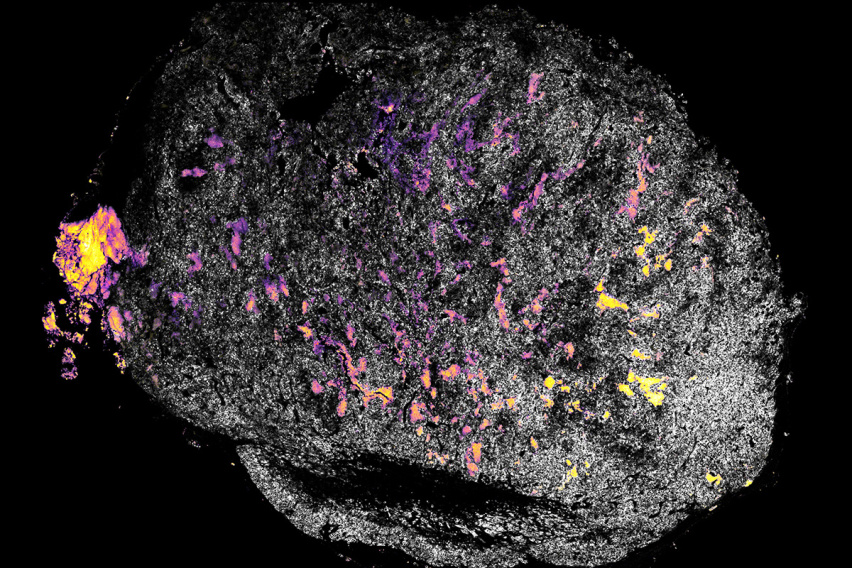
a tumor imaged after treatment, stained pink for IL12 and yellow for alum

Alum for the Ride

MIT News

Irvine and Wittrup lab researchers have developed a technique to make cytokine therapy less toxic. These immunostimulatory molecules are quite potent and can have devastating side effects if administered systemically. In a preclinical study appearing in Nature Biomedical Engineering and supported in part by the Marble Center for Cancer Nanomedicine, the researchers anchored the cytokines to tumors with aluminum hydroxide, a compound that is often used to make vaccines more effective. They then administered immune checkpoint blockade therapy, observing that the tumors were eliminated in 50 to 90 percent of the mice across three cancer types. The technology has been licensed to a startup company that hopes to begin clinical trials by the end of the year.

Filter by

Filter by Title/Description

Filter by Topic

Filter by Year

Angelika Amon wins 2019 Vilcek Award

Vilcek Foundation

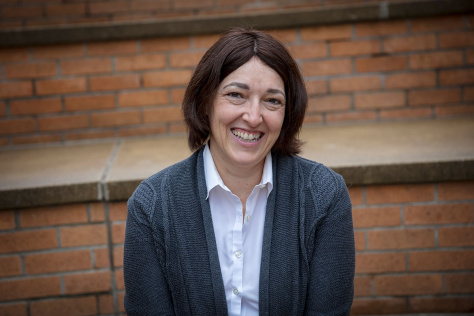
Many congratulations to KI member Angelika Amon on winning a 2019 Vilcek Foundation Prize in Biomedical Science. The prize honors immigrant scientists whose contributions have “extraordinary implications for our understanding of human biology and our prospects for treating human disease.” Amon's work has provided crucial insights into cell growth and division, and how errors in these processes contribute to birth defects and cancer. She and her fellow prizewinners will be honored at a gala in New York this spring. 

Lunch Lines of Inquiry

MIT News

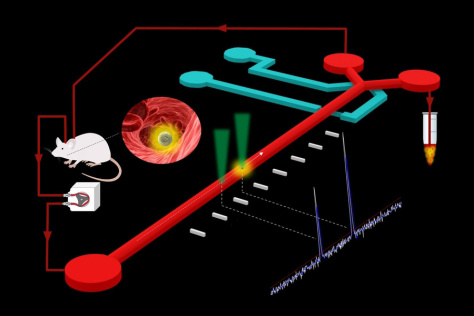
Thanks to a fortuitous connection in the Koch Café, it is now possible to longitudinally study cancer progression and treatment response in genetically engineered mouse models using circulating tumor cells. A new microfluidic platform, described in Proceedings of the National Academy of Sciences, combines expertise from the Manalis, Jacks, Shalek, and Vander Heiden Lab to capture and genomically profile these vanishingly rare cells from a single awake mouse without depleting the animal’s limited blood supply. 

Just Breathe

MIT News

A truly inspired combination of messenger RNA with a degradable polymer from the KI’s Anderson and Langer labs may make inhalable mRNA treatments for lung diseases possible. Once inside a cell, mRNA can induce cells to produce disease-fighting proteins, but its therapeutic potential is limited by how quickly and easily the body can break it down. In a proof-of-concept study appearing in Advanced Materials, researchers successfully delivered the combination of mRNA and stabilizing polymer to lung cells in mice using an inhalable mist. The work was partially supported by TranslateBio, which has begun testing an inhalable form of mRNA in a Phase 1/2 clinical trial in patients with cystic fibrosis. Listen in at Scientific American.

Beyond Cancer Genomics

Science Signaling

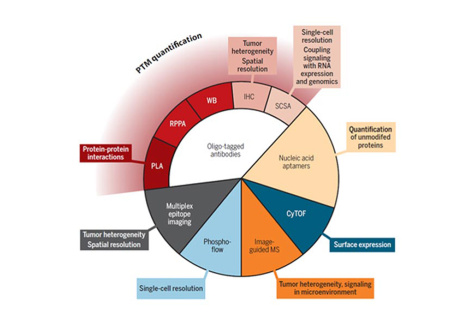
In an essay for Science Signaling, KI faculty member Michael Yaffe, the David H. Koch Professor of Science, makes a case for looking at cancer not as a disease of genetics, but as a disease of signaling. Yaffe argues that although genetic approaches have resulted in extraordinary insights into the disease, signaling information should be incorporated into the clinical decision-making process. He advocates for improving protein-based measurement technologies to analyze tumor cell signaling in clinical samples. This emphasis on expanding the cancer research focus from genetics to a broader program is echoed by other researchers and initiatives at MIT. For example, at MIT’s Center for Precision Cancer Medicine (which Yaffe directs), researchers explicitly incorporated non-genomic approaches into the fundamental mission and research portfolio.

Headphone Jacks

Transnetyx

Tyler Jacks sat down with Transnetyx founder and CEO Bob Bean to share his path to cancer research and his insights into building a career in science, the power of mentorship, and putting together a great lab. Listen in at the Highly Cited podcast.

Festschrift for Bob

Bioengineering & Translational Medicine

Bioengineering & Translational Medicine published a tribute issue (a.k.a. “festschrift”) in honor of the KI's own Bob Langer and fellow chemical engineering luminary Nicholas Peppas on behalf of the American Institute of Chemical Engineers and its Society for Biological Engineering. In the issue’s foreword, KI alumnus Aaron C. Anselmo writes that their work has “advanced the visibility of drug delivery and biomaterials in the scientific landscape, especially within chemical engineering, and has inspired young professionals to follow their paths.” 

In Fighting Shape

MIT News

Researchers in the laboratories of Scott Manalis and Alex Shalek have teamed up to test whether a cancer cell is fit enough to survive cancer treatment – and identify the weaknesses that may help clinicians knock drug-resistant cells out. The study, appearing in Genome Biology, combines the Shalek Lab's expertise in single-cell mRNA sequencing and a Manalis Lab device that measures the mass and growth rate of individual cells to investigate treatment of glioblastoma in collaboration with Keith Ligon's lab at Dana-Farber Cancer Institute. By overlapping cell measurements from the device and gene expression measurements associated with cellular responses to an experimental drug known as an MDM2 inhibitor, the team identified populations of resistant glioblastoma cells and gained new insights into how to target these cells more efficiently. 

Park Leaves Hahvahd Yahd to Hit the Rhodes

CNN

Congratulations to Jacks Lab researcher Jin Park on winning a 2019 Rhodes Scholarship. Park, a senior majoring in molecular and cellular biology at Harvard University, will be the first DACA-recipient Rhodes Scholar. In the Jacks Lab, Park studies the mechanisms of T-cell exhaustion. Elsewhere, he is a volunteer for the Phillips Brooks House Chinatown Citizenship program, the managing editor of the Harvard Undergraduate Research Journal, and the founder and co-director of Higher Dreams, which provides resources to undocumented students who want to attend college. At Oxford University, Park plans to pursue master's degrees in migration studies and global health science and epidemiology, with a view to building a career in advocacy for immigrant communities. However, as he explains in a CNN interview, there may be legal barriers to his return to the U.S. after he completes his degrees in the U.K.


And a CDK12 in a Repair Tree

MIT News

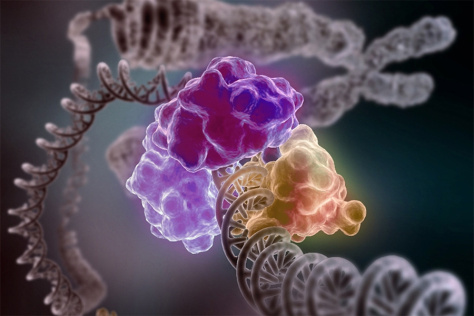
Certain genes—most infamously, BRCA1 and BRCA2—give rise to tumors by interfering with cells' ability to repair double-strand breaks in DNA. In work published by Nature, Sharp Lab researchers describe how the lone RNA-regulating gene in the BRCAness family, CDK12, contributes to DNA repair dysfunction without being directly involved in DNA repair pathways. The team’s findings offer new insight into the BRCAness of ovarian and prostate tumors and potential opportunities for clinical intervention. 

Putting the Y in Wireless

MIT News

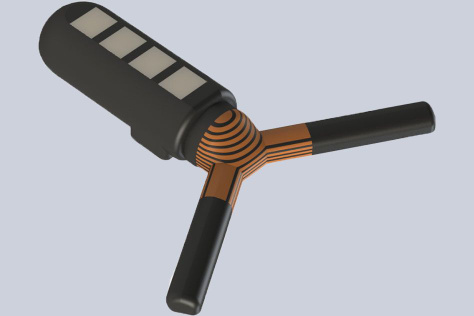
A new ingestible capsule created by a collaborative team of researchers, including KI members Robert Langer and Giovanni Traverso, is designed to monitor conditions within the body, deliver drugs, and communicate wirelessly with the outside world for weeks on end.* The customizable, long-lasting Y-shaped device, described in Advanced Materials Technologies, is manufactured using 3D printing technology and is applicable to many disease areas, including cancer. 

*For an overview of the growing field of ingestible electronics, see Langer and Traverso's recent article in Nature Reviews Materials.