This is the testing/development version of the Koch Institute website.

News

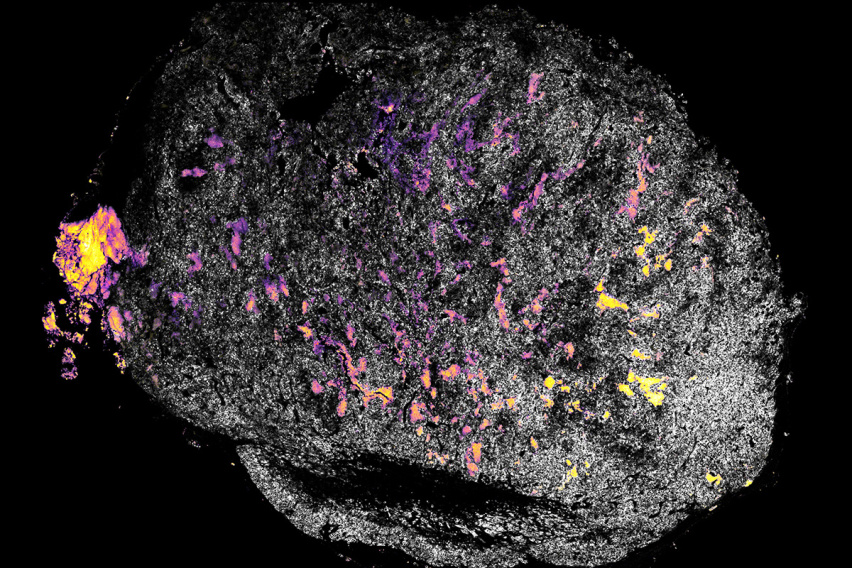
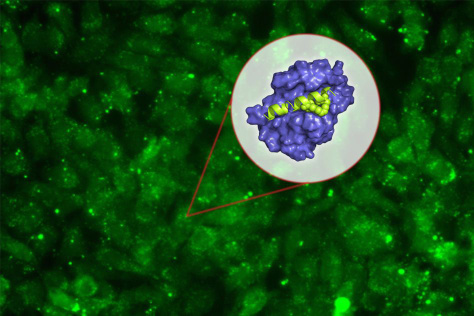
a tumor imaged after treatment, stained pink for IL12 and yellow for alum

Alum for the Ride

MIT News

Irvine and Wittrup lab researchers have developed a technique to make cytokine therapy less toxic. These immunostimulatory molecules are quite potent and can have devastating side effects if administered systemically. In a preclinical study appearing in Nature Biomedical Engineering and supported in part by the Marble Center for Cancer Nanomedicine, the researchers anchored the cytokines to tumors with aluminum hydroxide, a compound that is often used to make vaccines more effective. They then administered immune checkpoint blockade therapy, observing that the tumors were eliminated in 50 to 90 percent of the mice across three cancer types. The technology has been licensed to a startup company that hopes to begin clinical trials by the end of the year.

Filter by

Filter by Title/Description

Filter by Topic

Filter by Year

Belcher Elected to National Academy of Engineering

MIT News

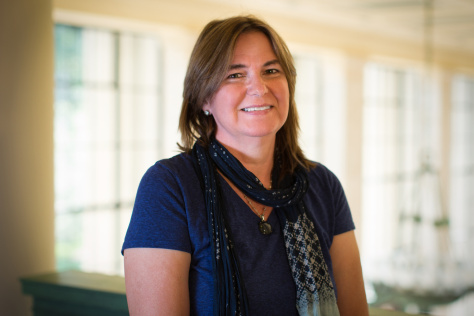
Hearty congratulations are in order for Koch Institute member Angela Belcher for being elected to the National Academy of Engineering (NAE)! Belcher, the James Mason Crafts Professor and Professor of Biological Engineering and Materials Science, was honored for her work in developing novel genetic evolution methods for the generation of new materials and devices. She is one of four newly elected members from MIT to be included in the 2018 class. Belcher's selection brings the total number of current KI faculty members elected to the NAE to nine. Read more more about her work in Chemical & Engineering News.

Lights! Cameras! Convergent Action!

MIT Koch Institute

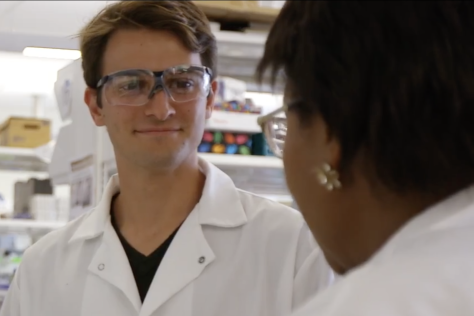
On World Cancer Day this year, we were excited to contribute to the global conversation on cancer with a new video highlighting how the Koch Institute uses convergence to bring new cancer solutions to more patients, faster. In this video, various KI investigators—including MIT President Emerita Susan Hockfield, KI Director Tyler Jacks, and professors Paula Hammond, Michael Yaffe, Sangeeta Bhatia, and Scott Manalis—tell the story of how convergence accelerates cancer research progress.

Putting Pen to Purpose

MIT Koch Institute

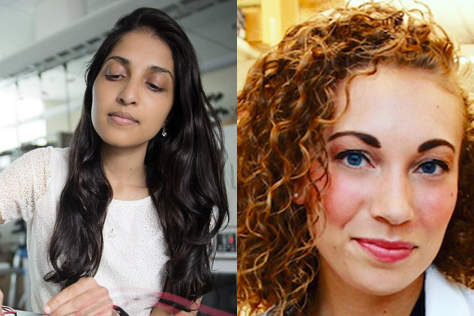
Two KI trainees are drawing on their own experiences as researchers in academia to offer mentorship and guidance to those pursuing similar career paths. Ritu Raman, a postdoctoral fellow in the Cima and Langer Labs, writes for the Society of Women Engineers: Women in Academia blog about her first year as a postdocoral researcher at MIT and gives tips for the graduate student to postdoc transition. Lauren Stopfer, a PhD candidate in the White Lab, was inspired to contribute to the MIT Graduate Student Admissions blog after attending a writing workshop during MIT's Independent Activities Period. Stopfer, who now serves on the blog's editoral board, uses the platform to give prospective students an authentic glimpse into the life of a MIT graduate student. 

Targeting Patient Success with Precision Cancer Medicine

MIT News

We are excited to kick off the new year by announcing the launch of the new MIT Center for Precision Cancer Medicine, housed within the KI and established by a major gift from an anonymous donor. With Director Michael Yaffe at the helm, the Center will advance progress within the field of precision medicine — one of the KI's five research focus areas. Fellow faculty members Michael Hemann, Angela Koehler, Matthew Vander Heiden, and Forest White join this endeavor. Driven by internal and external collaborations, particularly with clinical partners, the Center will focus on identifying the most effective drugs and combinations for individual patients. 

New Year Brings New KI Members

MIT Koch Institute

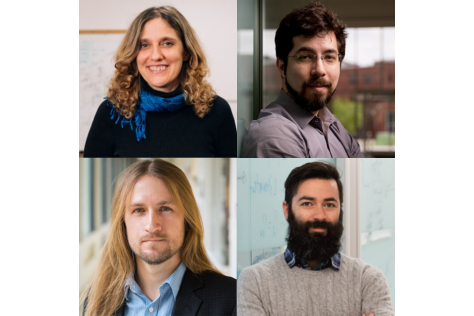
The Koch Institute is thrilled to announce four new extramural faculty members: Regina Barzilay, Ed Boyden, Jeremiah Johnson, and Alex Shalek. Barzilay, the Delta Electronics Professor of Electrical Engineering and Computer Science and a member of the Computer Science and Artificial Intelligence Laboratory at MIT, will bring to the KI her unique expertise in using data and machine learning to advance cancer detection and treatment. She is the recent recipient of a 2017 MacArthur Fellowship, which is known by many as the “genius award.” Boyden is Associate Professor of Biological Engineering and Brain and Cognitive Sciences at MIT's McGovern Institute and Media Lab, where he leads the Synthetic Neurobiology Group. His work focuses on developing tools for analyzing and repairing complex biological systems such as the brain, and applying those tools systematically to reveal fundamental principles of biological function. Boyden was recently named the recipient of NIH's Transformative Research Award. Johnson, Associate Professor of Chemistry at MIT, works to develop new macromolecule tools to address problems in chemistry, medicine, biology, energy, and polymer physics. He was recently named the winner of the MIT School of Science Teaching Prize for Undergraduate Education. Lastly, Shalek, who was recently named the Pfizer Inc.-Gerald Laubach Career Development Assistant Professor in the Department of Chemistry, leverages advances in nanotechnology and chemical biology to develop broadly applicable platforms for manipulating and profiling many interacting single cells in order to examine ensemble cellular behaviors from the bottom up. Fun fact: Alex was also a Koch Institute Image Awards winner back in 2013. Welcome, all!

Garg named Johnson Clinical Investigator

MIT Koch Institute

This month, Salil Garg begins his appointment as the Koch Institute’s new Charles W. (1955) and Jennifer C. Johnson Clinical Investigator. Garg’s research is focused on understanding the role of microRNAs and other potential drivers of ‘mutationally bland’ cancers. Since these tumors have few genetic mutations, which makes them unsuitable for genetically-targeted cancer therapies, Garg and his research group are studying other possible avenues for intervention. He is also working with the Anderson and Sharp laboratories to develop a technology for single cell microRNA sequencing as a diagnostic for early cancer detection.

Garg, a former Sharp Lab postdoc, is board certified in clinical pathology and completed a fellowship in molecular genetic pathology at Massachusetts General Hospital, where he currently practices. 

Cannula Believe It?

MIT News

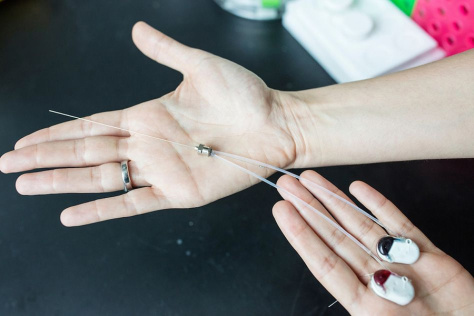
When it comes to drug delivery to the brain, ultrathin is in. As published in Science Translational Medicine, a team comprised of KI members Michael Cima and Robert Langer, KI alum and Assistant Professor at MIT's Media Lab Canan Dagdeviren, and the McGovern Institute's Ann Graybiel, have developed a device to deliver drugs to very specific areas of the brain — even its deepest regions. At the heart of the system is an ultrathin needle, a miniaturized cannula about the width of a single strand of hair, containing several tubes that release multiple drugs at controlled and precise doses and locations. This strategy supports another of the researchers' goals — to bypass the blood-brain barrier and avoid harmful side effects that can be caused by drugs meant for the central nervous system getting into the brain. This innovative delivery system has high potential for studying and treating neurological disorders, and possibly brain cancer as well. Read more in The Washington Post and The Boston Herald.

Arts and Crafting Cancer Solutions

STAT News

Ingenuity unfolds when ancient art meets modern engineering—just ask KI graduate student Katerina Mantzavinou, who aims to make ovarian cancer treatment less invasive, less toxic, and more effective. Working in the Cima Lab, she is developing an origami-like device that will be directly inserted into the abdomen to administer local intraperitoneal (IP) chemotherapy. The device, prototyped with support from the Koch Institute Frontier Research Program, releases a continuous low-dose of IP chemotherapy—an approach that the team previously showed, with support from the Bridge Project, to be as effective as the current IP regimen of periodic high-dose chemotherapy, while causing less toxicity. Learn about the origami-inspired creation of the implantable device from Mantzavinou and Cima and see their innovative idea come to life in this video feature from STAT. This project, also featured on Yahoo!, will make another appearance in the upcoming Image Awards exhibition, opening March 9 in the Koch Institute Public Galleries.

Fit to be Peptide

MIT News

A collaborative Bridge Project team, led by MIT biologist Amy Keating and Dana-Farber Cancer Institute physician-scientists Loren Walensky and Anthony Letai, describe a novel strategy for inhibiting Mcl-1, a protein that is often overexpressed in cancer and contributes to tumor cell survival and resistance to chemotherapy. The team modified small protein fragments, or peptides, using chemical approaches and sequence optimization techniques, to produce peptides that are stable and can enter cells. When administered to cancer cells that are dependent on Mcl-1 for survival, the peptides successfully induced cell death. This research, published in PNAS, could lead to the development of new drugs for many different cancer types, and thus holds significant promise for clinical translation. 

Lumicell's Success Shines Bright

Business Wire

Lumicell, a Koch Institute startup, is lighting up the Boston biotech scene! With its Lumicell System, the company aims to eliminate the need for repeat cancer surgeries, reduce the incidence of relapse, and save billions in healthcare costs. The low-cost technology comprises an injectable fluorescing agent and hand-held imaging wand, which emits light at a specific wavelength to illuminate, in real time, even single cancer cells left in surgical margins. Earlier this month, the company presented data from its ongoing Phase 2 clinical study in breast cancer patients showing removal of tumors as small as 1 mm. Trials are currently underway in other solid tumors — including prostate, colorectal, esophageal and pancreatic cancers — and being planned for lung, ovarian, and brain cancers. In a nod to the recently announced success of its clinical studies, Lumicell announced a $28.7 million Series C financing round.

As linked to earlier in this issue, on November 29, guests of the KI got an inside look at Lumicell's latest progress at SOLUTIONS with/in/sight, "Cells in the City." Lumicell's Linda Griffith, W. David Lee, and Moungi Bawendi joined SQZ Biotechnology's Armon Sharei and Amy Schulman to discuss their journeys from bench to biotech, and how grassroots funding from the Koch Institute’s signature Frontier Research Program helped propel these high-risk ideas into high-reward technology. Watch the presentations here and see photos from the event here.