This is the testing/development version of the Koch Institute website.

News

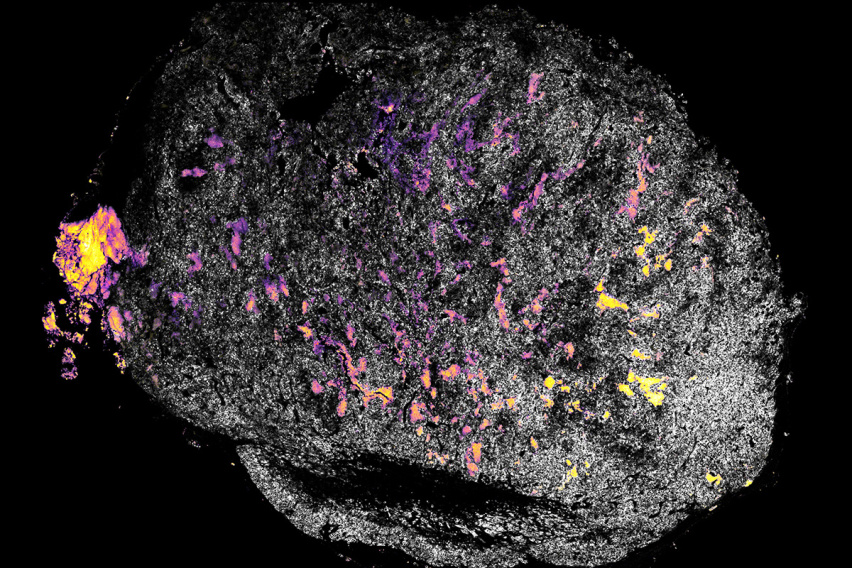
a tumor imaged after treatment, stained pink for IL12 and yellow for alum

Alum for the Ride

MIT News

Irvine and Wittrup lab researchers have developed a technique to make cytokine therapy less toxic. These immunostimulatory molecules are quite potent and can have devastating side effects if administered systemically. In a preclinical study appearing in Nature Biomedical Engineering and supported in part by the Marble Center for Cancer Nanomedicine, the researchers anchored the cytokines to tumors with aluminum hydroxide, a compound that is often used to make vaccines more effective. They then administered immune checkpoint blockade therapy, observing that the tumors were eliminated in 50 to 90 percent of the mice across three cancer types. The technology has been licensed to a startup company that hopes to begin clinical trials by the end of the year.

Filter by

Filter by Title/Description

Filter by Topic

Filter by Year

Promoter Sequence

MIT Koch Institute

Congratulations to Scott Manalis, Professor of Biological and Mechanical Engineering and Associate Department Head Biological Engineering, who has been appointed a David H. Koch Professor of Engineering. Manalis is the second person to hold the David H. Koch (1962) Inaugural Chair in Engineering; he succeeds Paula Hammond, who was recently named an Institute Professor, the highest honor bestowed on MIT faculty members. Though the timing is coincidental, it is fitting that the transition of this chair—created for the dedication of the Koch Institute in 2011—should take place during our anniversary year.

The KI is also pleased to congratulate several more faculty members on their promotions and new appointments: Alex Shalek has been granted tenure in the Department of Chemistry. Michael Birnbaum has been promoted to associate professor in the Department of Biological Engineering and Bradley Pentelute to full professor in the Department of Chemistry. In addition to his recent promotion to full professor, Matthew Vander Heiden has been appointed as the Lester Wolfe (1919) Professor of Molecular Biology.

Parsing Paraffin-Embedded Tissue Samples

Cancer Research

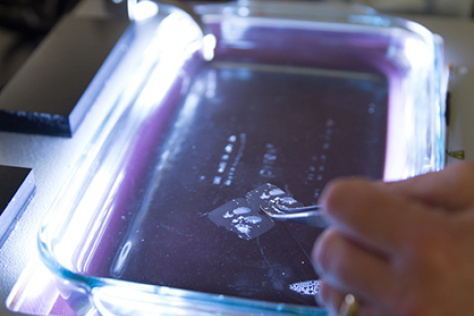
By combining bench and computational methods, the White Lab has created powerful techniques for analyzing cell signaling processes and identifying potential cancer therapy targets and drug combinations. Yet these techniques often require more tissue than is available in formalin-fixed paraffin-embedded (FFPE) tissue samples, one of the most widely available forms of preserved biopsy and tumor tissue. However, the researchers have developed an approach, published in Cancer Research, that collects data from FFPE samples with the same sensitivity as from less common, but larger frozen samples. With Mayo Clinic collaborators, the team was also able to identify patient-specific, cancer-driving signaling molecules in FFPE samples of breast and lung tumors. These findings suggest that this method can provide direct translational insight from analysis of FFPE specimens, and open huge repositories of patient samples to further study.

A Genetic Enhancer and a Scholar

MIT News

KI member Anders Hansen joins the 2021 class of the Pew-Stewart Scholars Program for Cancer Research. This early-stage career award honors and promotes cutting-edge research into the development, diagnosis, and treatment of cancer. Hansen’s work will explore the interactions between genetic elements known as enhancers and their target genes, focusing on c-Myc, a gene commonly overexpressed in cancer.

KI Welcomes New Executive Director

MIT Koch Institute

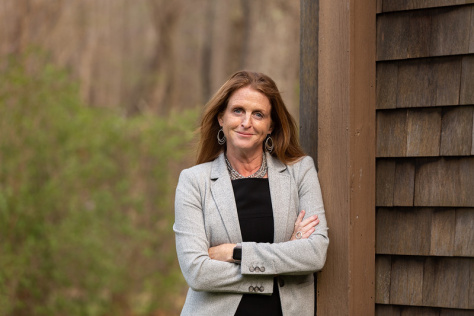
Jane Wilkinson is the new Executive Director of the Koch Institute. Building on her 20+ years of experience in scientific operations and alliance management at the Broad Institute, Cereon Genomics/Monsanto, and the Wellcome Trust Sanger Genome Center, Wilkinson will oversee the KI's overall outreach program, helping to build and manage collaborative interactions between the KI and academic, industry, and clinical institutions within and outside of MIT. She looks forward to meeting and working with the Koch Institute's talented community of researchers, collaborators, administrators, and friends.

Fate Accompli

Globe Newswire

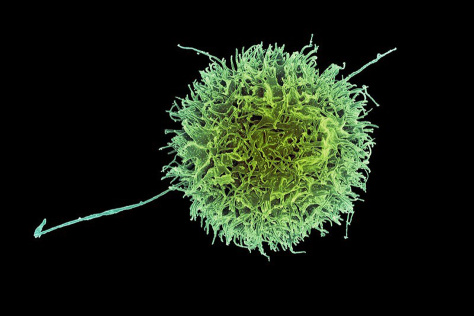
Fate Therapeutics, founded by Rudolf Jaenisch, reported positive data from their ongoing Phase 1 trial of FT516, a natural killer cell-based cancer immunotherapy engineered using an induced pluripotent stem cell (iPSC) platform. Eight of 11 patients with B-cell lymphoma responded favorably to the treatment, with six achieving a complete response.

Culture Club

MIT Koch Institute

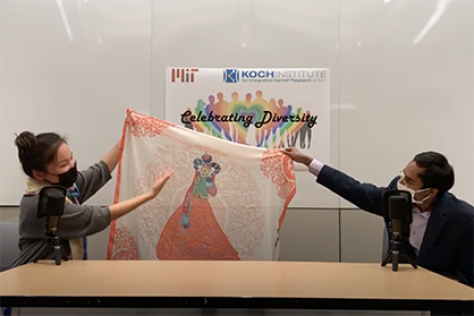
Introducing “Let’s Get to Know... Celebrating Diversity at MIT,” a podcast that invites Koch Institute members from different backgrounds to share their stories and the music, food, literature and more from their respective cultures. Join host Neel Bardhan to learn about Mongolian metals bands with fellow Belcher Lab trainee Uyanga Tsedev, the joys of cooking (and eating) pollo guisado with Building 76 custodian Kameron Santana, and finding a career while washing the lab dishes with KI director Matt Vander Heiden. 

Lodish Means Business

MIT News

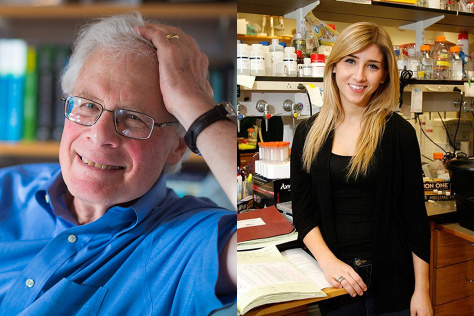
Congratulations to Harvey Lodish and Hemann Lab graduate student Kate Koch on winning a 2021 MITx Prize for Teaching and Learning in MOOCs for 15.480x (The Science and Business of Biotechnology), an interdisciplinary course that emphasized understanding the science behind biotech while exploring novel business structures and financing methods.

Fittingly, two Lodish-founded companies report positive news this month: Epizyme launched a new diagnostic program for follicular lymphoma patients and Rubius dosed its first patient in a Phase 1/2 trial of a combination therapy for advanced solid tumors.

Strand and Deliver

Endpoints News

Strand Therapeutics, co-founded by KI members Darrell Irvine, Ron Weiss, and Weiss Lab alum Jacob Becraft (recently named among Technology Review’s 35 Innovators Under 35), has emerged from stealth with $52 million Series A capital. Strand is developing a platform for creating programmable, self-amplifying mRNA vaccines, and aims to bring its first drug, an immunotherapy for solid tumors, to the clinic in 2022.

On the Surface of Silicone

MIT News

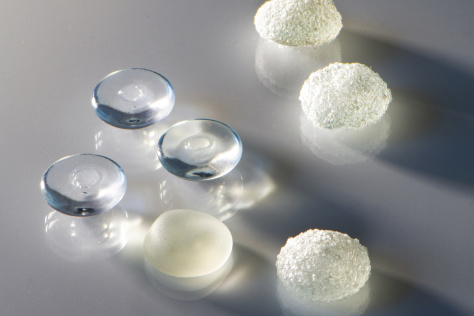
Langer Lab researchers analyzed the relationship between the surface architecture of silicone breast implants and adverse effects that include scarring, inflammation and, in rare cases, lymphoma. The team hopes their data, published in Nature Biomedical Engineering, will help scientist and engineers design safer, more effective implants of any type.

A Foot in Both Worlds

MIT Koch Institute

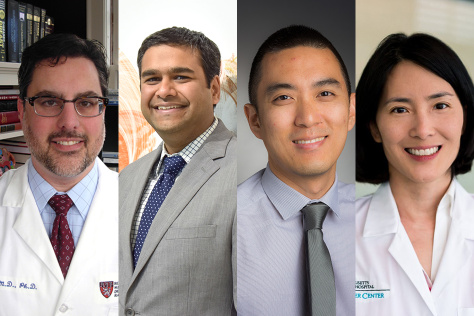
The Koch Institute Clinical Investigator program offers physician-scientists a unique opportunity to participate in cutting-edge cancer research while continuing their medical practice, and provides Koch Institute researchers with a frontline view of challenges in cancer treatment. Past and present Clinical Investigators joined program director Michael Yaffe for a roundtable discussion about the relationship between laboratory benchwork and clinical translation and practice, and the influence of the Koch Institute community and research model on their careers.