This is the testing/development version of the Koch Institute website.

News

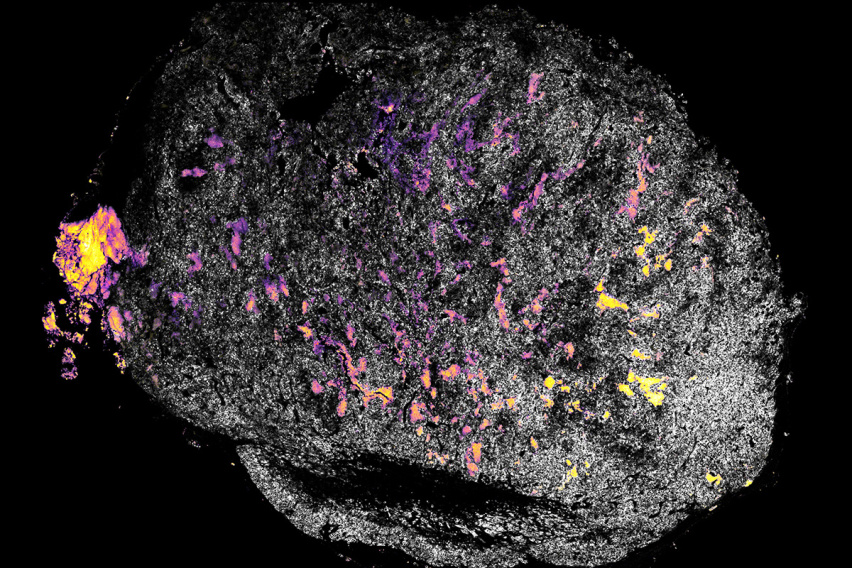
a tumor imaged after treatment, stained pink for IL12 and yellow for alum

Alum for the Ride

MIT News

Irvine and Wittrup lab researchers have developed a technique to make cytokine therapy less toxic. These immunostimulatory molecules are quite potent and can have devastating side effects if administered systemically. In a preclinical study appearing in Nature Biomedical Engineering and supported in part by the Marble Center for Cancer Nanomedicine, the researchers anchored the cytokines to tumors with aluminum hydroxide, a compound that is often used to make vaccines more effective. They then administered immune checkpoint blockade therapy, observing that the tumors were eliminated in 50 to 90 percent of the mice across three cancer types. The technology has been licensed to a startup company that hopes to begin clinical trials by the end of the year.


Filter by

Filter by Title/Description

Filter by Topic

Filter by Year

National Medal of Technology and Innovation Awarded to Robert Langer

MIT News

Robert Langer, David H. Koch Institute Professor, is one of eleven innovators nationwide to receive the National Medal of Technology and Innovation. Dr. Langer, who has received over 210 major awards to date, is one of only a handful of Americans to have won both it and the National Medal of Science. The National Medal of Technology and Innovation recognizes those who have made lasting contributions to America’s competitiveness and quality of life and have helped strengthen the nation’s technological workforce.

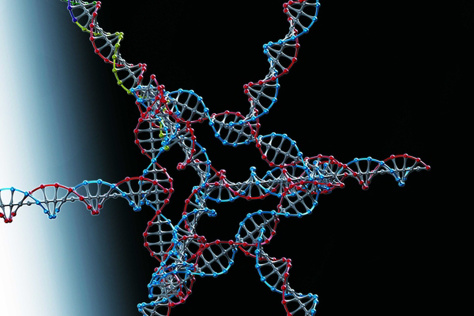
Nucleic Acid Origami Improves Therapeutic RNA Delivery to Cancer Tumors

MIT News

KI researchers have built tiny particles made out of DNA and RNA that can deliver snippets of RNA directly to tumors, turning off genes expressed in cancer cells. The particles' composition, together with their specialized construction, poses less risk of side effects and allows for better targeting. This research is reported in the June 3rd edition of Nature Nanotechnology.

Staggered Drug Delivery Shows Promise in Treating Aggressive Breast Cancer

MIT News

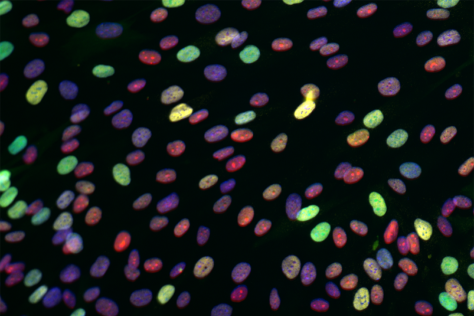
KI member Michael Yaffe and his laboratory team report finding, in the May 11 issue of Cell, that staggering the doses of two common cancer drugs dramatically boosts their ability to kill a particularly malignant type of breast cancer cells. Yaffe has been studying the complex cell signaling pathways of cancer cells and the ability of dysfunctional pathways to promote uncontrolled cell growth. He is now working with researchers at Dana Farber Cancer Institute to plan clinical trials of the novel approach.

Collaboration Key in Unique Attack on Cancer

MIT News

The Bridge Project collaboration between the Koch Institute at MIT and Dana Farber/Harvard Cancer Center (DF/HCC) awarded funding to four interdisciplinary teams on March 6, 2012. The teams will work together on two of the most lethal forms of cancer—pancreatic and glioblastoma, a type of brain cancer.  The unprecedented clinical research effort awards teams made up of biologists, bioengineers and clinical researchers from both cancer centers. It is the most extensive collaboration of its kind between Boston's two National Cancer Institute (NCI)-designated cancer centers. 

Platelets Can Serve as a "Travel Kit" for Tumor Cell Migration

MIT News

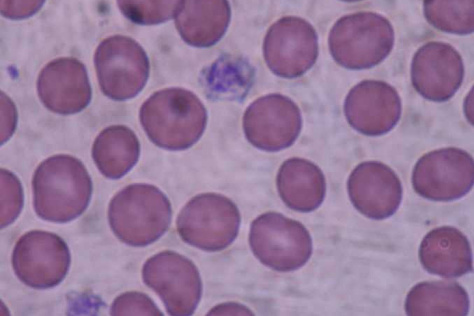
Platelets -- the blood cells that normally promote clotting -- are known to promote the metastatic spread of cancer, but the exact mechanism has remained unclear.  In the Nov. 14th issue of Cancer Cell, KI researchers report that platelets give off chemical signals that induce tumor cells to become more invasive and plant themselves in new locations. These findings may lead to new interventions to block metastasis.

National Medal of Science Awarded to Rudolf Jaenisch

MIT News

Koch Institute member Rudolf Jaenisch has been recognized for his work that has led to major advances in our understanding of mammalian cloning and embryonic stem cells.

KI Director to be Named to National Cancer Advisory Board

The White House

In the White House announcement of his appointment, Koch Institute Director Tyler Jacks was recognized by the President for his depth of experience and tremendous dedication to cancer research.

Koch Institute and OMJP launch TRANSCEND

MIT News

KI announced a major strategic partnership with Ortho-McNeil-Janssen Pharmaceuticals, Inc., and its affiliates, called TRANSCEND, whereby the parties will begin to collaborate in multiple areas of oncology research and technology development.

KI to host a new Center for Cancer Systems Biology

MIT News

This past week, the David H. Koch Institute for Integrative Cancer Research at MIT received funding from the National Cancer Institute (NCI) to become a Center for Cancer Systems Biology (CCSB). These centers are part of NCI's Integrative Cancer Biology Program (ICBP), which is the NCI's primary effort in cancer systems biology, a field that is rapidly seen as an essential component in the future of cancer research.

Koch Institute collaborative teams expand to include physicists

MIT News

Cancer research has traditionally been the realm of biologists, and, more recently, engineers. Now, physicists are getting in on the action. MIT has been awarded a five-year grant from the National Cancer Institute (NCI) to start a new Physical Science-Oncology Center. The funding, approximately $3.5 million per year, will support four cancer research projects led by MIT physical scientists.