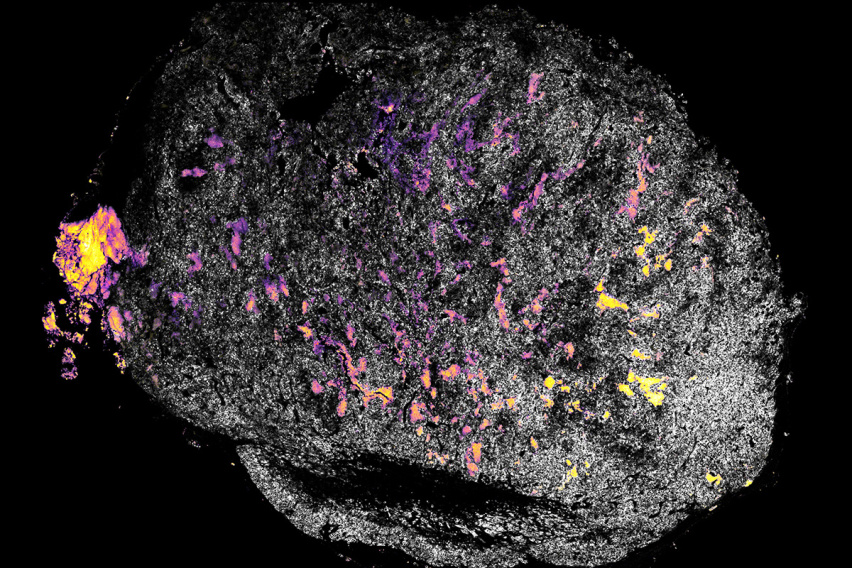
Irvine and Wittrup lab researchers have developed a technique to make cytokine therapy less toxic. These immunostimulatory molecules are quite potent and can have devastating side effects if administered systemically. In a preclinical study appearing in Nature Biomedical Engineering and supported in part by the Marble Center for Cancer Nanomedicine, the researchers anchored the cytokines to tumors with aluminum hydroxide, a compound that is often used to make vaccines more effective. They then administered immune checkpoint blockade therapy, observing that the tumors were eliminated in 50 to 90 percent of the mice across three cancer types. The technology has been licensed to a startup company that hopes to begin clinical trials by the end of the year.
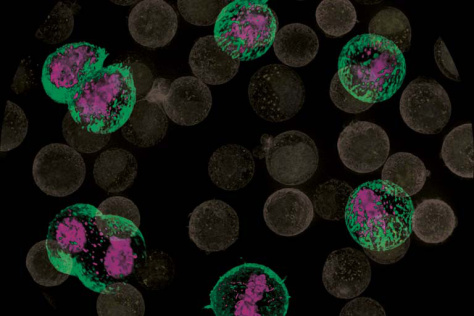
Manalis Lab researchers engineered a larger version of their signature microfluidic mass measurement technology to investigate how cell size and cell cycle contribute to cell growth. The study, published in PNAS, reveals that a cell's growth efficiency is primarily determined by its cell cycle state, not its size, and lays the groundwork for using these devices to monitor growth in large cells and 3D clusters with high resolution. The work was supported in part by the Koch Institute Frontier Research Program through the Kathy and Curt Marble Cancer Research Fund and the MIT Center for Cancer Precision Medicine.
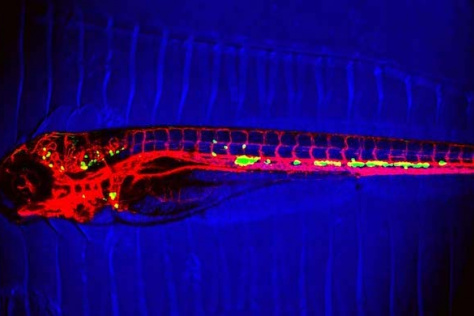
A new Cancer Research paper draws on Image Award-winning research to explore the influence of the YAP gene on metastasis. Using a transparent zebrafish model and time lapse imaging, Hynes Lab researchers tracked the movement of tumor cells through the vasculature, determining that YAP promotes active migration within small blood vessels and wider dissemination throughout the body. Working with the Manalis Lab to corroborate these findings in a mouse model, the team demonstrated how a single gene can affect global patterns of metastasis. The research was supported in part by the Ludwig Center for Molecular Oncology at MIT.
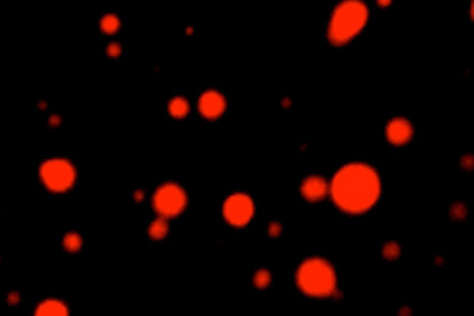
The Young Lab identified a mechanism by which small molecule cancer drugs concentrate within cells. In a study appearing in Science, researchers added cisplatin and mitoxantrone to mixtures of different types of cellular condensates—tiny droplets of close-packed proteins where complex functions are carried out. Their results offer insight into the effectiveness of cisplatin—as well as into tamoxifen resistance—and suggest that small molecule drugs can be tailored to target particular droplets to increase their efficacy.
The Koch Institute teamed up with the MIT Museum for Imaging Science, a two-week exploration of everyday science photography. A series of photography tutorials and webinars featured images and insight from KI Image Awards contributors, including Lina Colucci, Keith Ellenbogen, Felice Frankel, Jeffrey Kuhn, Sudha Kumari, Erika Reinfeld, Quinton Smith, and Matheus Victor.
A Love Lab-led consortium unites leading organizations in biopharmaceuticals and vaccines to accelerate the development and accessibility of alternative host cells for manufacturing drugs and vaccine components. With an eye toward global access for health solutions, including pandemic-relevant vaccines, the effort establishes a new framework for biomanufacturing, large-scale production of low-cost biopharmaceuticals and rapid clinical translation.
The Koch Institute hosted a second Zoom webinary showcasing cancer researchers who have pivoted existing research to address biomedical challenges related to the COVID-19 pandemic. Koch Institute faculty members Michael Yaffe, Angela Koehler, Sangeeta Bhatia, and Robert Langer shared their work developing new treatment strategies and interventions for the disease. The program included Q&A sessions for learning more about the science and understanding how the Koch Institute’s flexible, collaborative research models accelerate innovation in the face of rapidly evolving understanding.
The Jacks Lab identified a new therapeutic target for an aggressive form of lung cancer. Lung adenocarcinoma accounts for about 40 percent of lung cancers in the U.S., with 20–30% of lung adenocarcinomas harboring mutations in the gene KEAP1. In previous work, the group showed that lung adenocarcinomas that are mutated for both KRAS and KEAP1 are highly aggressive and dependent on the breakdown of glutamine—paving the way for clinical trials of glutaminase inhibitors in combination with other therapies that target KEAP1-mutant non-small cell lung cancers.
In a new study, led by graduate student Rodrigo Romero and appearing in Nature Cancer, researchers screened of a library of genes that are known or predicted to be druggable in a comprehensive and systematic search for new therapeutic targets for KEAP1 mutant non-small cell lung cancers. The screens identified the gene Slc33a1, as well as several other genes that are associated with the unfolded protein response, a process key to cell viability. Tests in cell lines and in mouse models showed a strong dependency for Slc33a1 in non-small cell lung cancers, suggesting that patients with Keap1-mutant tumors may respond to SLC33A1 inhibition.
A team led by White Lab grad student Lauren Stopfer developed a tool that may help researchers and clinicians make cancer immunotherapies more effective: a platform that precisely quantifies the number of antigens presented on cell surfaces. In a study appearing in Nature Communications, researchers profiled changes in cell-surface antigens resulting from treatment with CDK4/6 inhibitors, a class of anticancer agents. Their results added to a growing body of evidence that CDK4/6 inhibitors may increase the effectiveness of immune checkpoint blockade inhibitors, and demonstrated that the platform could be used to identify new immunotherapy targets. Because of its sensitivity and speed, the new platform could be used in the clinic to tailor treatment strategies to individual patients.
This study was funded in part by the MIT Center for Precision Cancer Medicine and the Koch Institute Frontier Research Program through the Kathy and Curt Marble Cancer Research Fund.
Professors Angela Belcher and Christopher Love, with Charles W. (1955) and Jennifer C. Johnson Clinical Investigators Salil Garg and Hojun Li, shared their work to address the COVID-19 crisis at the first online SOLUTIONS with/in/sight. Their virtual tours of ongoing PPE, diagnostics, and vaccine development projects highlighted how the KI’s flexible, collaborative research models allow for rapid response to pressing biomedical needs.